|
Lake Charles, Hackberry, Cameron, Louisiana Houston, Brenham, Round Top, La Grange & Georgetown, Texas Places Visited: Louisiana: Lake Charles, Hackberry & Cameron Texas: Houston, Brenham, Round Top, La Grange & Georgetown. Monday, May 5, 2003 Sam Houston Jones State Park, Lake Charles, Louisiana $12 per-night full hookup 30-amp. The sewer at most spots is not really accessible. We got an early start on a long scenic drive today. The National Geographic Guide to Scenic Highways and Byways and the U.S. Department of Transportations "Federal Highway Administration's" publication America's Byways (All-American Roads & National Scenic Byways) both list Louisiana Route 27 as a Scenic Drive. The scenic drive begins in Sulphur, 5 miles west of Lake Charles on I-10. Sulphur derives its name from huge mineral deposits found in a nearby salt dome. South of Sulphur we passed through miles of flat fields before crossing the Intracoastal Waterway which runs from west Texas to Florida along the Gulf coast. We pass on the west side of Calcasieu Lake, 19 miles long and 8 miles wide. Calcasieu Lake is linked to the Gulf by a shipping channel. Ocean going tankers traverse the shipping channel all the way up to the oil refineries around Sulphur and Lake Charles. On the south side of the Intracoastal Waterway the landscape changed dramatically to brackish tidal marsh with few trees. At this point you can look east and see ocean going tankers making their way to and from the refineries while on the west side you see oil fields. Then we passed through Hackberry, (named for the hackberry tree). Hackberry is the "blue-crab" capital of Louisiana but shrimp boats were all we saw as we passed through. From Hackberry to the Gulf coast "resort" town of Holly Beach we drove through Sabine National Wildlife Refuge. A tour of the area would not be complete without a stop at the Sabine Refuge Visitor's Center to view displays of wildlife and listen to the excellent diorama featuring a Cajun man telling about the wildlife found in the marsh. Joyce and I thoroughly enjoyed the exhibits as Mother did. The visitor's center is one thing you should do if you are ever pass this way. Sabine Refuge is the Gulf Coast's largest waterfowl refuge. The refuge is the winter home to many of the ducks and geese that summer in the prairie lands of mid-America and Canada. The drive from the Intracoastal Waterway all the way to Holly Beach is FLAT wet prairie. Nothing appears to be more than 5 feet above water level. You can see from horizon to horizon across the wet prairie of marsh grasses and reeds. The drive west from Holly Beach is along the Gulf. The beach along here is a stark contrast to Florida beaches. South of the highway is the Gulf while on the north side is fenced in cattle ranch land for as far as the eye can see. Grass grows right to the waters edge. Holly Beach is "Redneck Riviera" if I have ever seen one. Several hundred small beach houses/shacks that look more like fish camps make up the community. Traveling east on route 27 from Holly Beach the land remains flat as the highway moves inland a bit from the Gulf as we approach the port city of Cameron, Louisiana. In Cameron we have to wait for a free ferry to transport us across the shipping channel. Cameron is a base for boats tending the offshore oil platforms. Crew boats line the ship channel. In Cameron we followed a sign that pointed to an RV-Park located on the Gulf. The RV-Park appeared to be operated by the city. It was no more than a huge parking lot with electric and water connections located around the perimeter. There was a bath house but we did not spot a dump although surely there was one. From Cameron we continued east on route 27 to Oak Grove. Oak Grove is located on a chenier "French for a high place where oaks grow" The strip of land along the road from Oak Grove to Grand Chenier is an ancient sand dune. It is now home to the few people that inhabit this low land. If you are not on one of the cheniers down here you are most likely either in the water or less than a foot or so from getting wet. Trees only grow on the cheniers or high ground near the highway, everything else is a wet prairie. As we head north on route 27 to the town of Creole and eventually the metropolis of Lake Charles we pass through Cameron Prairie National Wildlife Refuge. This is another refuge for wintering water foul. The refuge is virtually all wet prairie consisting of water plants and grasses. This refuge is wetter than Sabine. We pass many areas with blooming lily pads. Lotus plants abound but are not blooming. Water hyacinths, pickerel weed, wild iris, and a variety of other water plants cover the prairie on both sides of the highway. We stopped in the Cameron Prairie Refuge Visitor's Center and enjoyed the excellent dioramas depicting life in the coastal prairie. If you are ever traveling through this area make sure that you stop and enjoy the Visitor's Center's excellent displays and dioramas. Of course we had to cross over the Intracoastal Waterway again on an extremely high bridge that gave us an unparalleled observation platform from which to view the vast prairie stretching in all directions.
Back in Lake Charles we had lunch at the Cajun Café a real "hole-in-the-wall" with super good food. It is one of those places where all the workers go for lunch with entrée and three vegetables for $5.50. The address is 1317 Broad Street (business-90). Don't be scared by the looks of the place, it is the food inside that you want. Ambience can come later. Joyce loves one of the signs inside "No dancin on tables with spurs on". It does not take much to amuse her. VBG Our next stop was the 300 year old Sallier Oak located at 204 west Sallier. It is in the yard of a historical museum. The oak is one of the most magnificent specimens in the country. The museum was closed on Monday. Oh well! The next order of business was a drive along shell road that borders the eastern shore of Lake Charles and contains a collection of beautiful estates with homes that match the grandeur. The remainder of our afternoon was spent back at the RV recuperating and preparing for our journey to Houston tomorrow. Tuesday, May 6, 2003 We drove 125-miles from Lake Charles, Louisiana to Houston Leisure RV-Resort 601 S. Main St. Highlands, TX 77562 (281-426-3576) Full hook up 50-amps pool, modem everything extra. $22.50 Our goal today was to make it to Houston so Mother could visit with her sister that she has not seen in 5-years. The only way to get to Houston from Lake Charles is via I-10. That would be the same I-10 that has been maligned by RV'ers as the worst stretch of highway in the country. There is good news and BAD news in the trip. The stretch of I-10 between Lake Charles and the Texas line is simply HORRIBLE. Running between 50 to 55 miles per hour the motorhome feels like it is in a violent earthquake. The old concrete highway should be condemned. Now for the good news. I-10 in Texas has been resurfaced since we were last here in 2001. The ride into Houston on I-10 was uneventful. As we cross the border into Texas the exit number is 878 indicating that I-10 stretches more than 878 miles across Texas from El Paso in the west to Orange in the east. Any way you look at it that is a long way.
Upon arriving in Houston we called Mother's sister. The remainder of our day was spent enjoying relatives. Wednesday, May 7, 2003 We drove 101-miles from Houston to Artesian Park/RV Campground 8601 Highway 290 w., Brenham, Texas 979-836-0680 Full hookup 30-amps $16 per-night (veterans get a $5.00 discount thus it is $11.00) We started for Brenham around 9:30 this morning heading west on I-10. We intended to take the beltway around Houston. Street Atlas and the GPS said to take exit 781-B to get on the beltway however, that information did not square with interstate signs as we approached the exit. To make a long story short we missed our opportunity to take the beltway around Houston and were heading downtown on I-10 with no place to turn around. We swallowed hard and made lemonade out of lemons. As it turned out the traffic was not bad and traffic was not going all that fast. In about 30-minutes we emerged on the other side of Houston none the worse for our experience. So much for all the horror stories about traffic in Houston. We lucked out! We were in Brenham in short order where we set up the motorhome and headed downtown to eat lunch at "Must Be Heaven" a quaint little sandwich shop that Joyce likes. Now Joyce and Mother are fans! After lunch we headed to the Blue Bell Ice Cream factory for their factory tour and free ice cream. The Blue Bell tour is always a "home-run". After the tour Mother wanted to make sure we would do it again tomorrow. That was something all of us could agree on. If you are around Brenham make sure you do this tour. >From the Blue Bell tour we headed to the small community of Independence and the Rose Emporium. The Antique Rose Emporium is an 8-acre retail display garden center. It is landscaped to feature old garden roses, native plants, old-fashioned cottage garden perennials, herbs plus a wildflower meadow. This is a free and fun place to visit. Down the street from the Rose Emporium we stopped by the Texas Baptist Historical Center-Museum and Church. We passed up the museum and only viewed the church from outside. This church was organized in 1839, the earliest Baptist congregation in Texas. Sam Houston was converted and baptized by this church in a nearby creek in 1854. Next door was the original site of Baylor University. Baylor was sponsored by this church. Next on our list was Washington-on-the-Brazos State Historical Park. This is where the Texas Declaration of Independence was drafted and signed on March 2, 1836. The building where the document was drafted is one of the preserved buildings in the park. The park also has a working homestead farmstead complete with docents in period costume cooking with cast iron pots in a detached primitive kitchen and farmers tending gardens and livestock. It is a good learning experience. That was our last formal tour for the day but we took a long scenic drive through some of the most beautiful country anywhere on the way back to our RV. Mother got to see her first scissor tail fly catcher.
Thursday, May 8, 2003 Trek mileage Artesian Park/RV Campground 8601 Highway 290 w., Brenham, Texas 979-836-0680 Full hookup 30-amps $16 per-night (veterans get a $5.00 discount thus it is $11.00) Joyce had us scheduled to tour the Round Top Museum in Round Top, Texas this morning. The museum is really a collection of historical houses from the 1830's to the 1880's. There is also a period barn and church. In each house is a collection of furniture, sewing machines, cooking utensils and other items from the mid 1800s. Behind one of the houses is an osage orange tree locally called a bois d'arc (colloquially "bodarc," "bodock") which is French for bows because the Osage Indians used the wood to make bows. A huge pomegranate bush with bright orange flowers is prominent on the museum grounds. Mother liked the stenciling on the walls inside some of these old homes. In some rooms the stenciling was just around the edge as a trim while in others the whole room was stenciled resembling modern day wallpaper patterns. Joyce likes the antique chairs and benches that were made for individuals that are her size. Mother also liked the way some of the houses were put together with wooden pegs and how the cracks were sealed with local mud. We ate lunch at Royer's. This is a little restaurant that regularly hosts upscale crowds from Houston looking for something special. Weekends regularly require a 2-hour wait. The house specialty is pies. Joyce and Mother both had pieces of pie. The owner spices many of his dishes with cilantro. Mother had never knowingly tasted cilantro. That changed today. She now knows what cilantro tastes like. According to her it will not become a staple at her house. Mother says that you would never expect the exciting upscale food in a place that looked "like that" on the outside. I loved the signs hand written by the owner on the walls, counters, coolers and other items. Some of the owner's homilies include: On the restroom wall "This isn't high school go outside to smoke". On the cooler outside "beer, wine and colas on the honor system except cash in advance for bankers and lawyers", another near the entrance "if you are in a hurry go back to Houston". While there were many others those are the ones we could remember. Mother is becoming accomplished in picking out cottonwood and post oak trees. From Round Top we headed south to La Grange where we viewed an 1850s Lutheran Church that has been immaculately maintained. A huge live oak tree on the grounds of the court house has been around since the 1840s when it was the meeting place. Just out of town was Monument Hill State Park. The Monument marks the spot where the remains of the "black bean massacre" occurred. In one of the battles with the Mexicans over 150 Texans were taken prisoner. Santa Anna ordered that 10% be executed. To carry out the order the Mexicans put 135 white beans and 15 black beans in a pot. The prisoners drew beans. The ones that picked the black beans were taken into a room where they were given pencil and paper in order to write a letter home. Then they were executed. Years later a group of Texans went to the site and recovered the bones. Those remains now reside in a common marble encasement at the monument. The view from the top of the hill overlooking the Colorado River is awesome. For RV'ers there is a nice RV-Park within a few blocks of downtown La Grange with huge pull thru sites. The name was Colorado Landing RV-Park 979-968-9465. Friday, May 9, 2003 We drove 105-miles to Live Oaks at Berry Creek RV-Park. It is near Georgetown and has 50-amps is the only redeeming feature of this full hook up park. $15. We moved the motorhome from Brenham to Georgetown, Texas via a series of country roads. The views along the way were of beautiful ranch land and rich farming areas. As we approached Taylor, Texas huge fields of corn were visible as far as the eye could see on both sides of the road. North of Taylor wheat was mixed with the corn. Most of the wheat looked ready for harvest. The corn was only about a foot or so high. The town of Taylor is noted for Bar B Q but if I had to give it a nick name it would be corn-central. Giant silos were what I remember most about Taylor. The corn and wheat fields continued all the way to Georgetown. Georgetown is home to Southwestern University. My Mother graduated from Southwestern back in the early 40s. After we got the Motorhome settled into the RV-Park we headed to the locals favorite "Monument Café" for lunch. Everyone in town was eating there. Monument Café is a monument to simplicity housed in a plain rectangular building with glass brick corners. Inside there is a long counter with stools opposite the door and steel banded tables with well worn wooden chairs. The waitresses are jumping about like a long tailed cat in a room full of rocking chairs. The kitchen's chef was serving a unique creation "King Ranch Casserole" as the lunch special, Mother and I ordered. Always take the advice of the cook! I would have named it chicken tamales but "King Ranch Casserole" does sound more aristocratic. Anyway, it was great and we would both go for the cooks special any day. After lunch we stopped Southwestern where we met the President and took a grand tour. Mother was impressed with all the new construction. Buildings on campus are constructed of native sandstone. Graduation is tomorrow. Students were cleaning out their dorm rooms and paying late fees.
The Historic Downtown area of Georgetown is built around a square comprised of the Courthouse in the center of the square like so many historic towns. The courthouse and historic buildings on the square are also constructed of sandstone. The town has done an admirable job of preserving old homes and buildings. Click here for more Texas travellogsUntil next time remember how good life is. More Louisiana AdventuresAdventures by State ** 2003 Travel Adventures
Mike & Joyce Hendrix
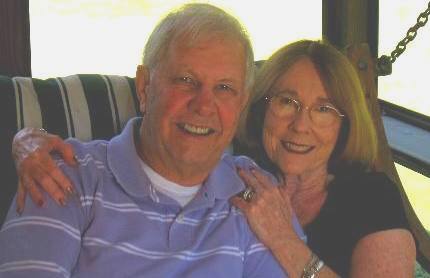
Mike & Joyce Hendrix who we are We hope you liked this page. If you do you might be interested in some of our other Travel Adventures: Mike & Joyce Hendrix's home page Travel Adventures by Year ** Travel Adventures by State ** Plants ** Marine-Boats ** Geology ** Exciting Drives ** Cute Signs ** RV Subjects ** Miscellaneous Subjects
We would love to hear from you......just put "info" in the place of "FAKE" in this address: FAKE@travellogs.us Until next time remember how good life is.
|
| ||
|
| |||
|
| |||
|
|