Palouse Region of Washington
Our sightseeing included the cities of Uniontown, Colton, Pullman and Palouse
all in Washington. Then Viola, Moscow and Genesee in Idaho. June 26, 2007. We are staying in Hells Canyon Resort in Clarkston, Washington. Hells Canyon is a top notch RV-Resort at $30 per-night with cable and wifi FHU totally paved interior roads and pads.
We are taking a sight seeing drive to see the Palouse Region of Washington and Idaho. We started our tour of the Palouse Region at the top of Lewiston Hill 10-miles north of Lewiston, Idaho. Before I introduce pictures you need to understand that the Palouse Region is unique in that it is an extremely rich agricultural area that results from the rich loess soil. The Palouse Region is a patchwork of rolling hills in southeastern Washington and the adjacent area of northwestern Idaho. The region extends from the Snake River in the south to Spokane in the north and extends from the mountains of Idaho on the east to the western side of Whitman and Spokane on the west. The soil in this region is loess a very fine wind-borne soil. Loess is a rich soil and as such the region is almost exclusively devoted to agriculture. The characteristic rolling hills topography of the Palouse began forming about 6 million years ago as tiny soil particles, blown on the wind, began to fall and build-up in this region. This wind-borne soil that built into the hills is called loess. Loess is is a Scandinavian word pronounced like "look" with an "S" sound instead of a "K" as in loo-ss. The usual source of loess is old lake beds, eroded hillsides and flood plains. In any event loess is very fine particles of sand and dust usually blown in on arid, glacial winds. Palouse area loess is a tawny color with even texture. Some deposits are 200 or so feet deep. There are a total of FIVE travel adventures covering our tour of the Palouse Region of Washington and Idaho. Make sure you check out each of these travel adventures: Palouse Region of Washington # 1 ** Palouse Region of Washington # 2 ** Palouse Region of Washington # 3 Palouse Region of Idaho # 1 ** Palouse Region of Idaho #2 Now lets see what loess can grow.
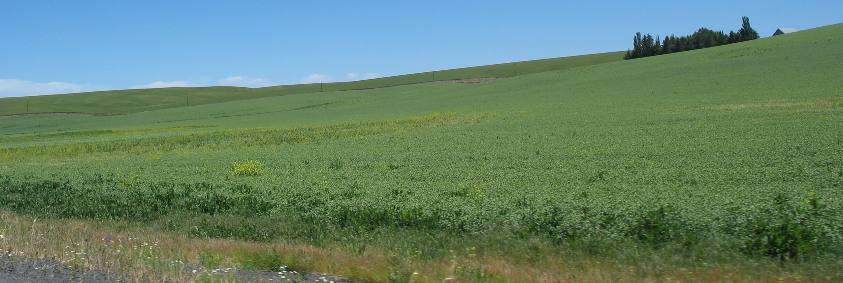
Peas or beans on a Palouse Region farm operation
This was taken south of Uniontown, Washington as we were heading north on US 195. These are beans or peas. They grow a lot of dry peas, chickpeas, lintels and garbanzos in addition to grain in this area. Too bad I can't tell one pea from the other. The brilliant green of these vast pea fields covers the landscape as far as the eye can see, and the eye can see a long way in this treeless region.
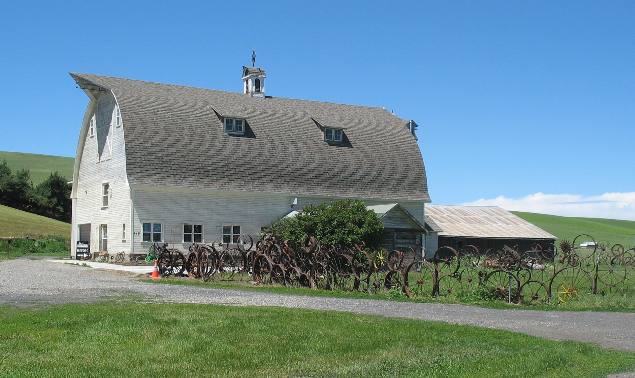
Damen Barn on highway 195 in Uniontown, Washington
This is the Damen Barn on highway 195 in Uniontown, Washington. A group of local artisans work and sell their creations Thursday through Saturday in the barn as well as conduct classes. Joyce did not get to spend several hours in the barn because this was Monday. Sometimes I get lucky. VBG Actually, I might have enjoyed watching the artisans.
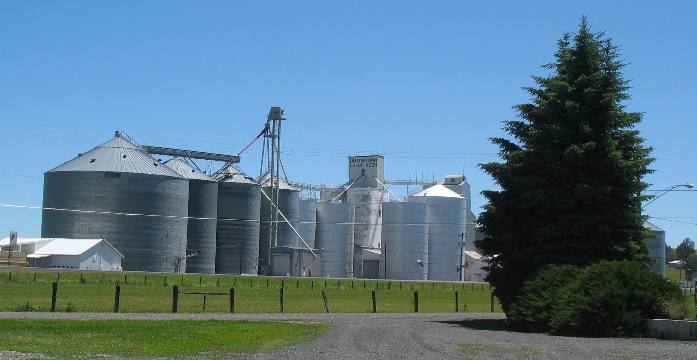
Grain elevators in the Palouse Region of Washington
This is grain and dry pea country as can be seen by these silos.
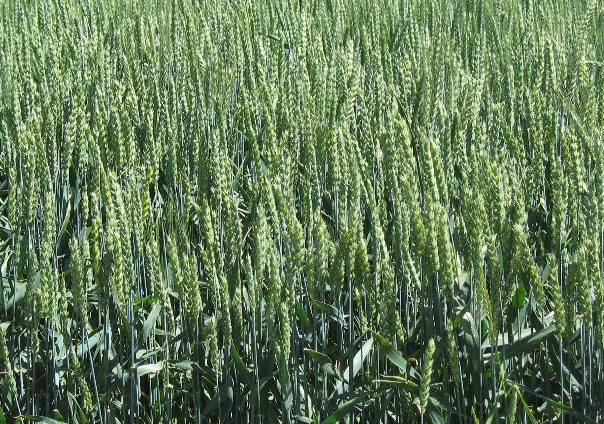
Grain in the Palouse Region of Washington
This is a close-up of one of the fields of grain.
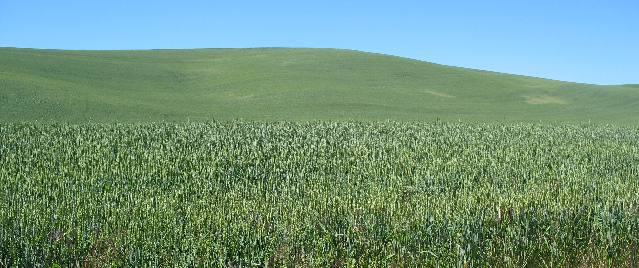
Grain in the Palouse Region of Washington
This field of grain stretches beyond the horizon.
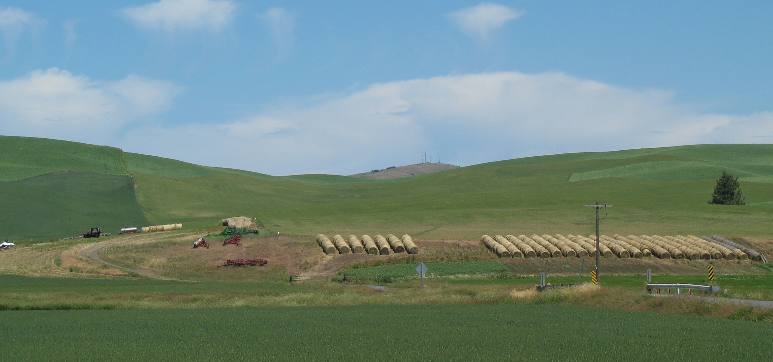
Hay operation in the Palouse Region of Washington
When this farmer isn't growing beans and grain it looks like he is producing hay. Isn't this beautiful! There is no irrigation being used to produce these beautiful crops.
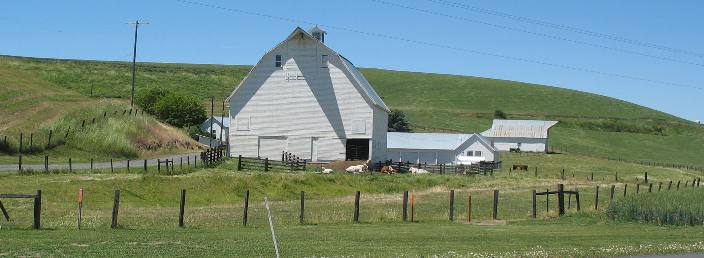
Barn in the Palouse Region of Washington
Joyce thought this was a cute barn and I agree.
There are a total of FIVE travel adventures covering our tour of the Palouse Region of Washington and Idaho. Make sure you check out each of these travel adventures: Palouse Region of Washington # 1 ** Palouse Region of Washington # 2 ** Palouse Region of Washington # 3 Palouse Region of Idaho # 1 ** Palouse Region of Idaho #2
Click here for more Washington Travel Adventuresor Click here for Idaho Travel AdventuresUntil next time remember how good life is.
Click here for more Washington travellogsUntil next time remember how good life is. More Washington AdventuresSome Idaho Adventures ** More 2007 Travel Adventures
Mike & Joyce Hendrix
Mike & Joyce Hendrix who we are We hope you liked this page. If you do you might be interested in some of our other Travel Adventures: Mike & Joyce Hendrix's home page Travel Adventures by Year ** Travel Adventures by State ** Plants ** Marine-Boats ** Geology ** Exciting Drives ** Cute Signs ** RV Subjects ** Miscellaneous Subjects
We would love to hear from you......just put "info" in the place of "FAKE" in this address: FAKE@travellogs.us Until next time remember how good life is.
|
| ||
|
| |||
|
| |||
|
|