Buhl, IdahoIdaho: Buhl, Balanced Rock, Clear Springs Trout farm and various
dairies in the area June 6, 2007
We are staying at High Adventure River Tours RV-Park/Store & Dutch Oven Cafe located on the southeast corner of exit 147 near Hagerman, Idaho. It is a nice RV-Park with shade and long pull through sites. PPA with tax ran $16.20 for FHU. For those of you that are not familiar with PPA (Pass Port America) it is an organization you can join for less than $50 per-year. Campgrounds that belong to PPA offer 1/2 price discounts. That kind of savings can quickly add up. While participating PPA parks generally have some restrictions on dates the PPA offer is valid, or possibly days of the week the discount is valid, or perhaps the number of days that the PPA discount will be honored the discount is genuine. Many times PPA campgrounds are new campgrounds that need help in getting established. Other times PPA campgrounds may be on the outskirts of town instead of in the "prime" location thus they need to provide an incentive for campers to stay with them. Whatever the reason PPA campgrounds generally provide a much cheaper option. PPA is the only campground organization that I think is worth the cost. PPA does not have a gimmick. What you see is what you get. Once you join they send you a directory listing all participating campgrounds. The PPA directory is the FIRST directory we check when trying to locate a place to spend the night. You can join PPA by calling 228-452-9972. If you decide to join PPA, it would be nice if you gave them my number "R-0156251" as the PPA member that told you about PPA. In return PPA will give me a years membership free. I will thank you in advance for that kindness. Thank you.
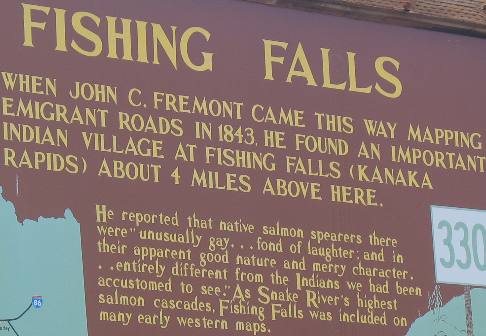
Fishing Falls on the Snake River between Hagerman and Buhl, Idaho
Unfortunately we did not get to visit Fishing Falls. We would have visited it on a boat ride that was canceled because of high winds. Oh well, we can't do everything.
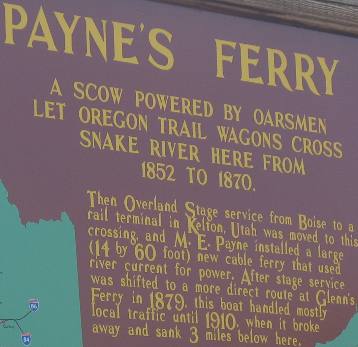
Payne's Ferry on the Snake River between Buhl and Hagerman, Idaho
Payne's Ferry and Fishing Falls are both located on the Snake River between Buhl and Hagerman.
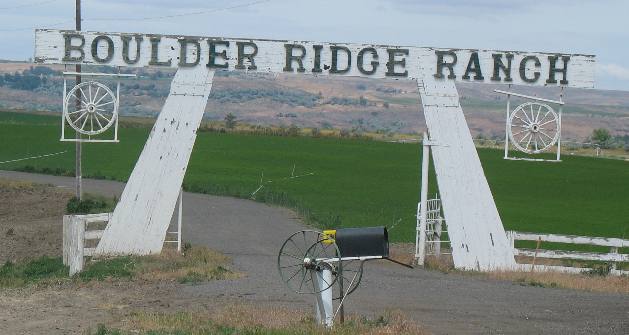
Ranch Gate between Buhl and Hagerman, Idaho
Joyce snapped this picture of another Idaho Ranch Gate. Now this one is getting close to the grandeur of a "Texas Ranch Gate".
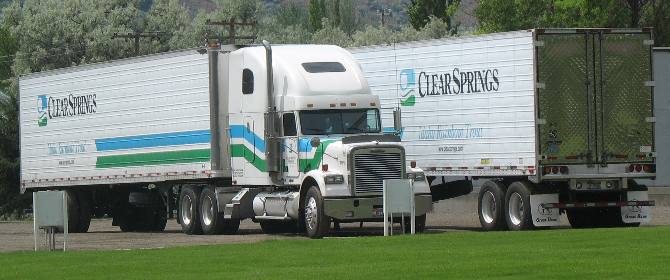
Clear Springs Trout Farm in Buhl, Idaho
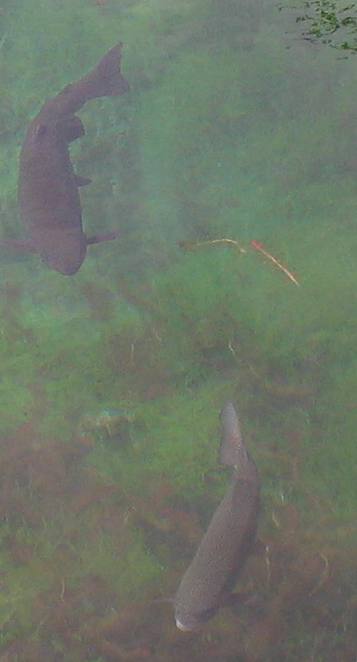
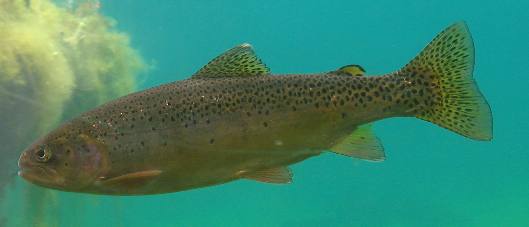
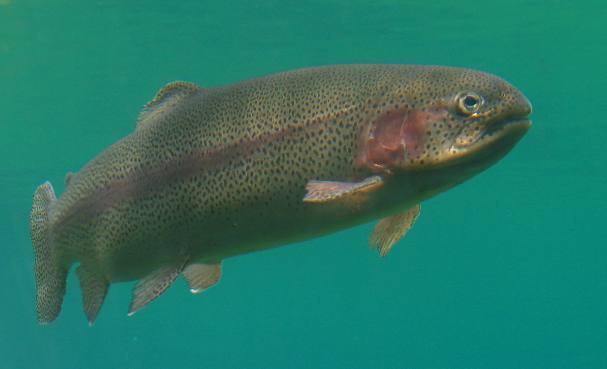
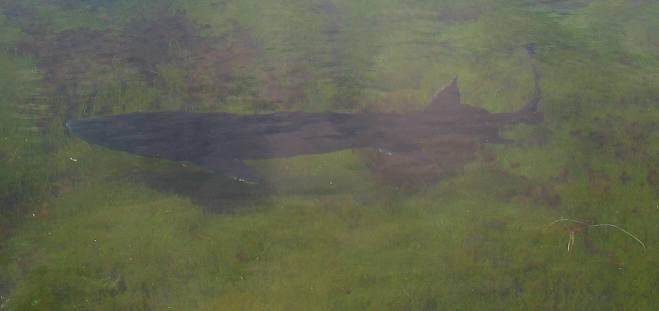
The unique spring water that gushes from the lava canyon walls from the Snake River Aquifer provide not only spectacular scenic beauty, but also pure, clear, oxygenated water at a constant temperature of 58 degrees Fahrenheit, the ideal temperature for raising trout. Located throughout the Hagerman Valley are Federal and Idaho State fish hatcheries as well as We took these pictures at the Clear Springs Foods Visitor Center in Buhl, Idaho, the largest producer of trout in the world. Approximately 70% of all the trout produced in the U.S. comes from hatcheries along a 30-mile stretch of Snake River Valley with Buhl and Hagerman being the center of that activity. Clear Springs Foods is located in Buhl and we visited their facility. Their Visitor Center offered an underground viewing area where visitors could see sturgeon and trout in a natural setting.
Trout in the Clear Springs Foods Visitor Center in Buhl, Idaho
We took these pictures at the Clear Springs Foods Visitor Center in Buhl, Idaho
We took these pictures at the Clear Springs Foods Visitor Center in Buhl, Idaho
Sturgeon in the viewing pond at Clear Springs Visitor Center in Buhl, Idaho
This was a good size sturgeon, I would estimate that it weighed in excess of 50-pounds (at least a salt water fish, that I am familiar with, would weigh that much).
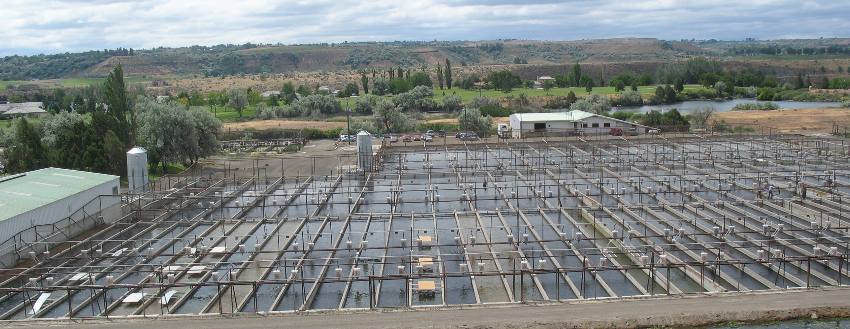
Growout ponds at Clear Springs trout farm in Buhl, Idaho
While we were taking these pictures from a bluff overlooking the tanks of fish either the owner or the manager of the facility stopped to talk with us. I think he stopped thinking we might be industry spies or something but quickly realized otherwise and stayed to tell us about the operation.
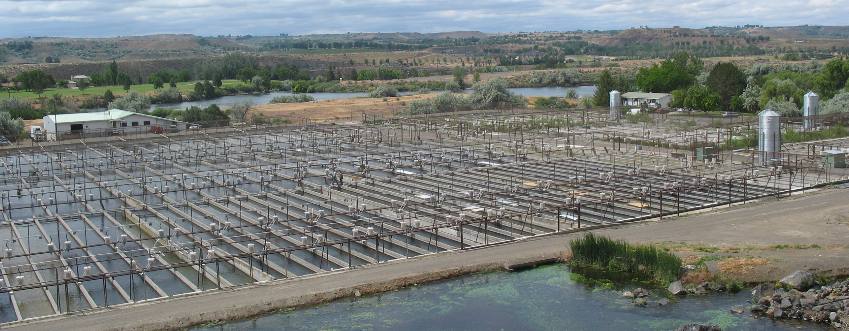
Growout ponds at Clear Springs Trout Farm in Buhl, Idaho
The light colored tanks on the far right don't have fish or water in them. There isn't enough water coming out of the springs anymore. Farmers are pumping out so much water that the flow isn't as great as it used to be. They are in court over that issue now.
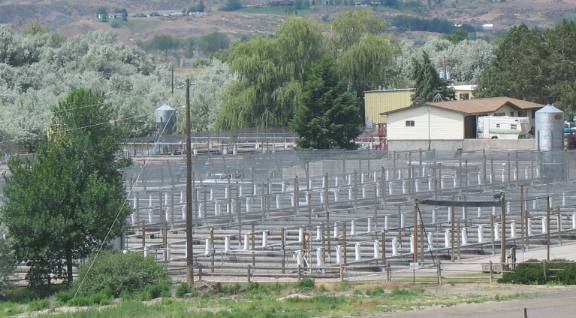
Trout ponds or raceways at Clear Springs Trout Farm in Buhl, Idaho
More trout ponds or raceways or whatever they call them.
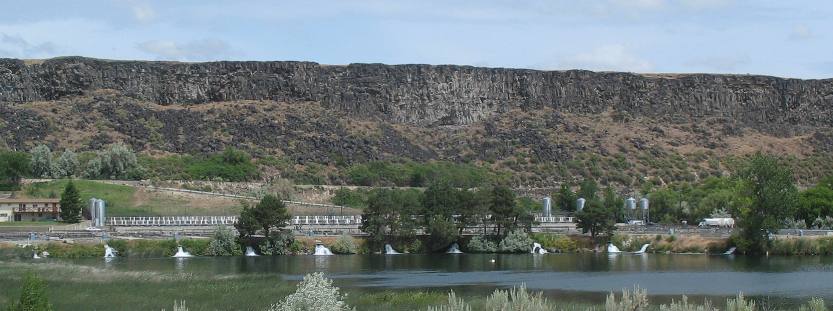
Basalt wall in Snake River Canyon near Buhl, Idaho on the property of Clear Springs Trout Farm
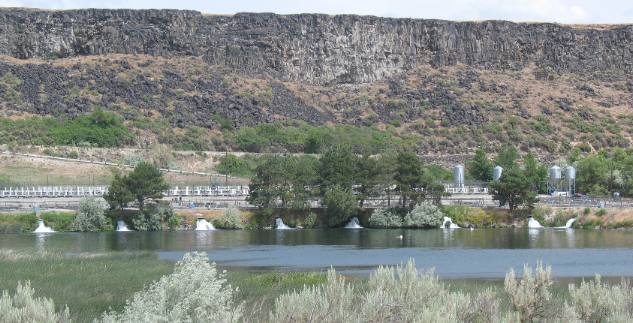
When we took the above pictures we were on the bluff looking down on the trout facilities. Now we are looking back at them from ground level. Some of the raceways can be identified by the white railing you can see behind the trees. But I took this picture to show the tremendous water flow through those raceways into this settling pond.
Clear Springs Trout Farm Buhl, Idaho with the solid basalt wall of Snake River Canyon in the background
The raceways are designed so that fish poop will drop to the lowest level (in other words they do not have flat bottoms). Workers vacuum (with a 2" hose and high power pump) the solids i.e.., (poop) and send it to another treatment pond. While this pond naturally gets some of the (poop-enhanced) nutrients the majority is removed via the pump. That highly nutrient rich, poop filled, water is sent to settling ponds that act much like normal septic tanks where bacteria work their magic. Let's switch to a geography lesson. It should be easy to spot the solid basalt wall of Snake River Canyon in the background. Basalt is molten lava (igneous rock) so what you are looking at is a huge amount of ancient lava flow. I have no clue how deep it is but in places I can see over 400' of basalt/lava in the cliff walls so it is deeper than that. At the bottom of this wall you see a talus slope. Talus is rock rubble that has fallen off the canyon wall.
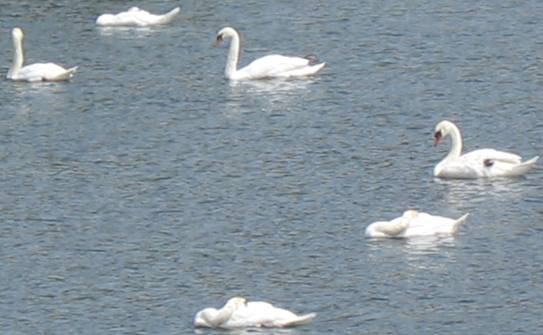
Mute Swans one of the settling ponds at Clear Springs Trout Farm in Buhl, Idaho
We were surprised to spot a large flock of Mute Swans on the lake. Many, though none in this picture, had 3 to 4 baby swans with them. Mute Swans, according to my bird book, were imported from Europe to a few places in the Eastern United States. The writers of that book obviously did not know about this group that is flourishing in Idaho.
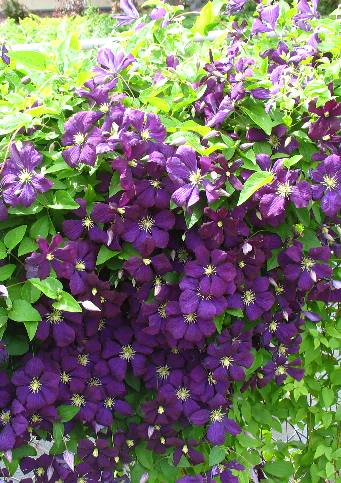
Beautiful clematis vine at Clear Springs Visitor Center in Buhl, Idaho
This clematis vine was growing on a fence at the Clear Creek Visitor Center. We liked the color.
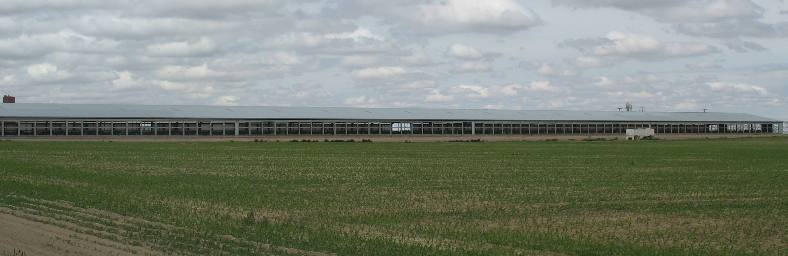
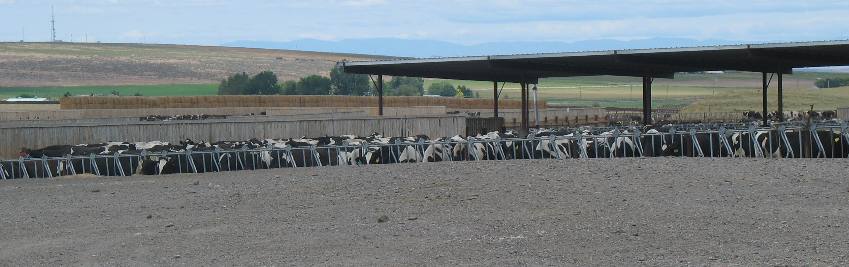
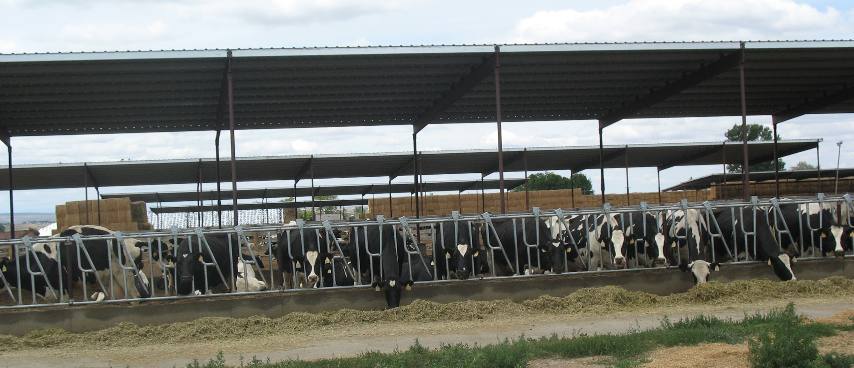
Large dairy in southern Idaho between Buhl and Hagerman
Since being in Idaho and following the Snake River west we have been amazed at the number of dairies. Dairies are as thick as flees on a dog in this area, and I am not talking about small operations. These are large dairies and dairy products are big business in Idaho. There are over 200,000 dairy cows in this area of Idaho alone.
Dairy barn in southern Idaho between Buhl and Hagerman
The dairy industry is the number one agricultural industry in Idaho, and is approaching being 3-times greater than potatoes in raw product sales.
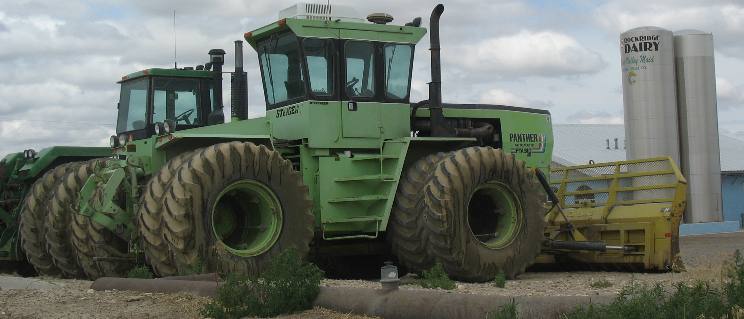
Dairy equipment in southern Idaho between Buhl and Hagerman
Large dairy operation require large equipment. These large machines are used to clean manure out of the cows living space. Of course this is done while the cows are in the milking area twice or is it 3-times a day. These are what I would term giant pooper scoopers. VBG
Large dairy in southern Idaho between Buhl and Hagerman
In addition to milk, cheese has also become an important finished product. There are cheese and whey protein processing facilities in Gooding, Richfield, Jerome and Twin Falls producing millions of pounds of several varieties of cheeses annually.
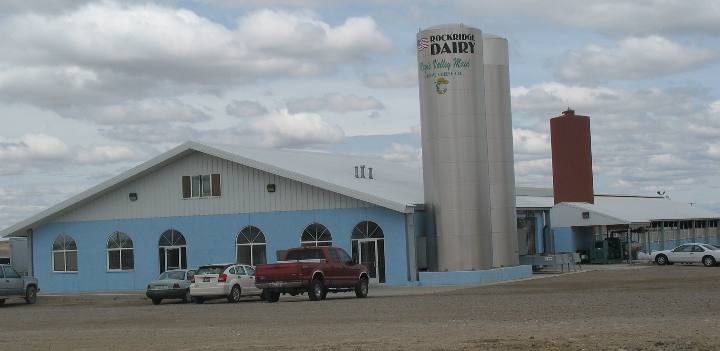
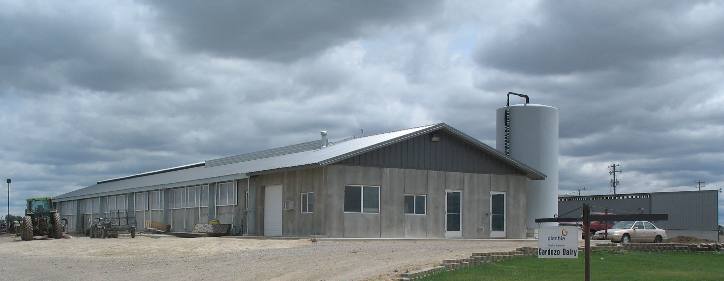
This milking barn is on a large dairy south of Buhl.
Large dairy operation in southern Idaho between Buhl and Hagerman
Idaho is the 2nd largest milk producing state in the 12-western U.S. States and ranks 4th in the total U.S.. Idaho has passed Pennsylvania and is now the 4th largest milk producing state and is third in the production of cheese.
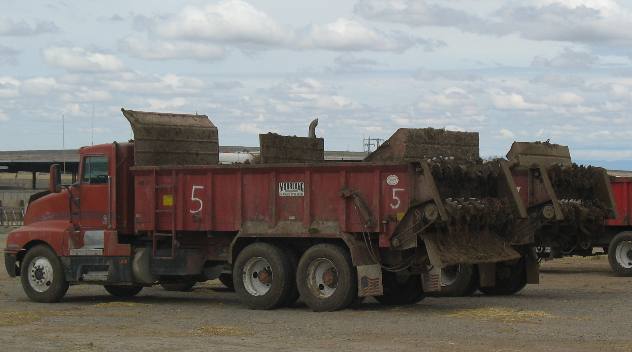
Dairy equipment in southern Idaho between Buhl and Hagerman
When you have this many dairy cows you have a LOT of poop. Thus you need large poop spreaders. Are these large enough?
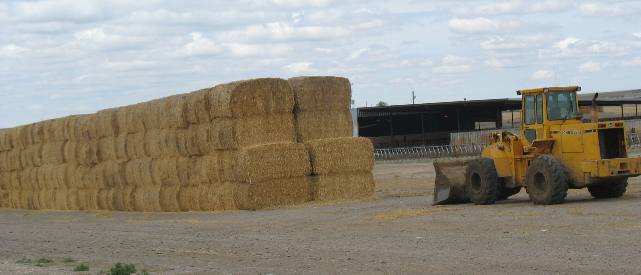
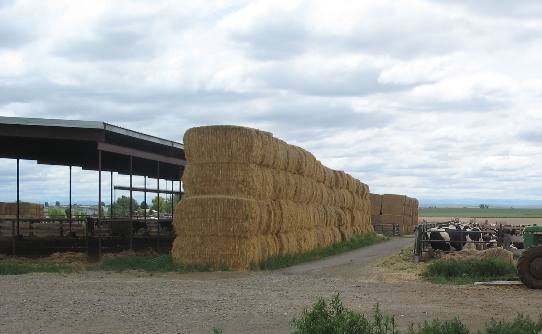
Hay stockpiled at one of the large dairies around Buhl, Idaho
If you are going to feed large quantities of cows you need large equipment to move the food. Is this large enough for you? As of November, 2006 Idaho had 686 dairy farm operations with 477,470 cows (with over 200,000 of those cows in the Snake River Valley area).
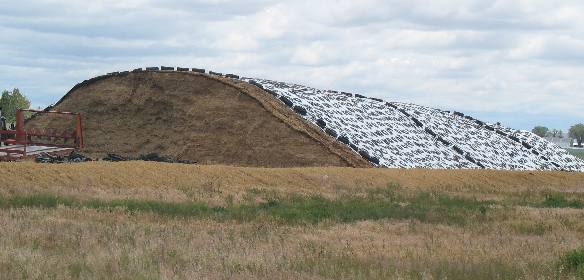
Food supply for one of the large dairy operations around Buhl and Hagerman, Idaho
We realize it takes a lot of feed to keep a large dairy operating but we get blown away at the size of these food supplies. Idaho is 3rd in the nation in production of cheese behind California and Wisconsin.
Hay stockpiled at one of the large dairy operations around Buhl, Idaho
Large dairy around Buhl and Hagerman, Idaho
Livestock cash receipts run around $2.5 billion.
Large dairy operation around Buhl and Hagerman, Idaho
Approximately 40.1 million gallons of Idaho produced milk is processed into fluid milk for drinking.
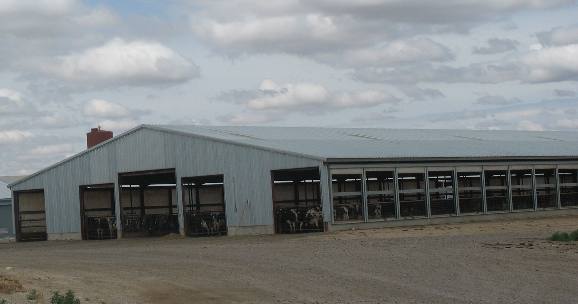
Large dairy around Buhl and Hagerman, Idaho
Large milking barn around Buhl and Hagerman, Idaho
Milking barn.
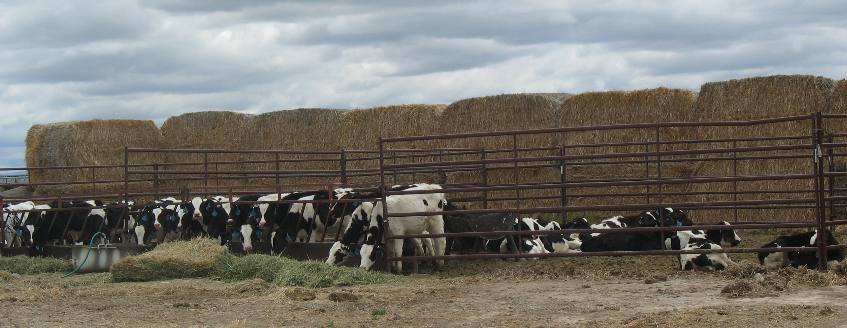
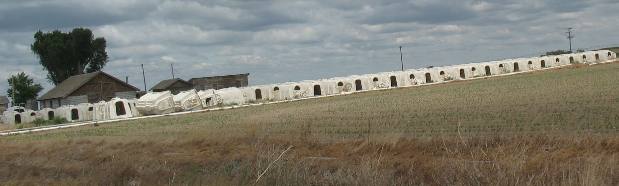
Calving area of a large dairy operation around Buhl and Hagerman, Idaho
When you are in the dairy business you have to deal with a lot of calves. This is where small calves are kept until they stop sucking everything in site.
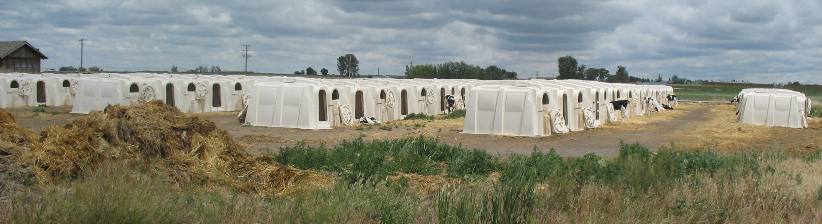
Calving area of a large dairy operation around Buhl and Hagerman, Idaho
Large daries mean dealing with a lot of calves. I would suspect most of these are female calves. It would be my guess that male calves are sold as soon as possible since daries aren't in the business of dealing with male cattle.
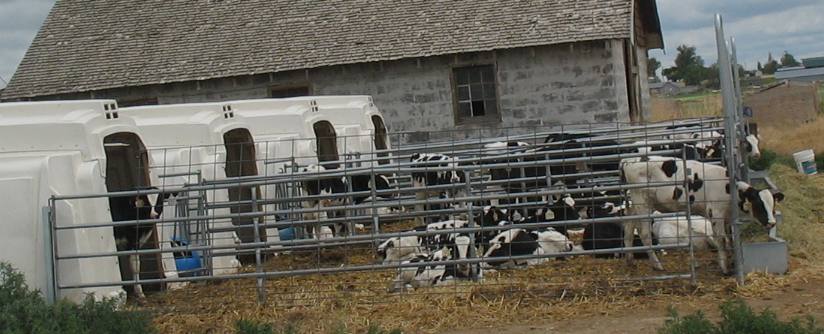
Calving area of a large dairy operation around Buhl and Hagerman, Idaho
Once calves have stopped sucking every thing in site they can be moved to facilities like this where they are eating solid food.
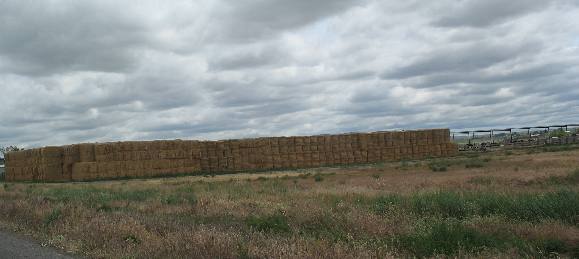
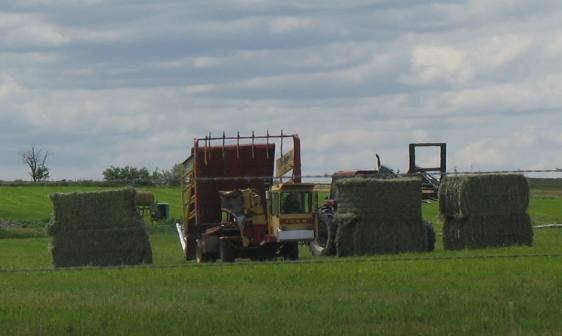
Hay farming operation supplying the dairy operations around Buhl and Hagerman
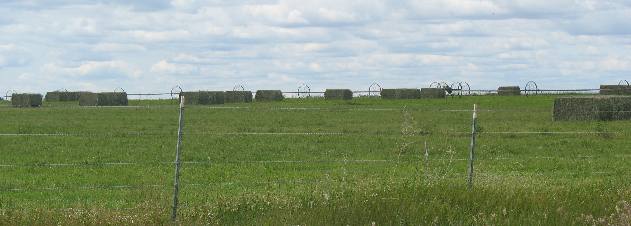
Hay is in demand and the area farmers produce a lot of it. Most of these farmers do not mess around with small bales they produce these large bales that take a large tractor with fork lift tongs to pick them up.
Hay farming operation supplying the dairy operations around Buhl and Hagerman
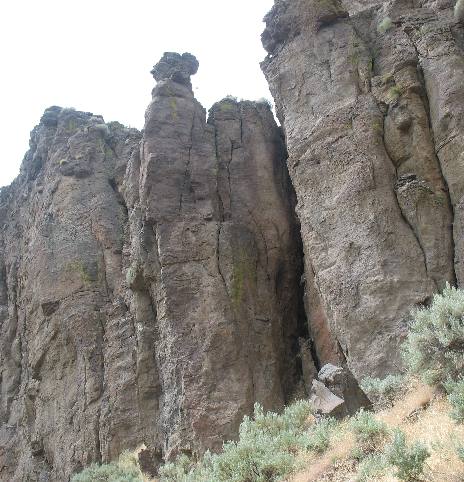
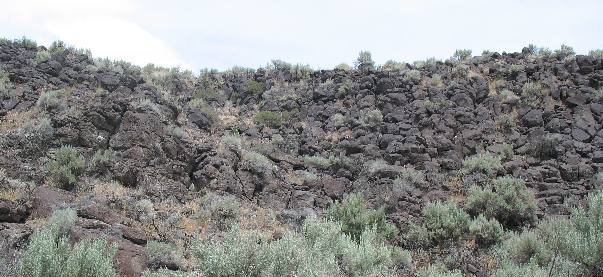
Canyon wall of solid basalt south of Buhl, Idaho
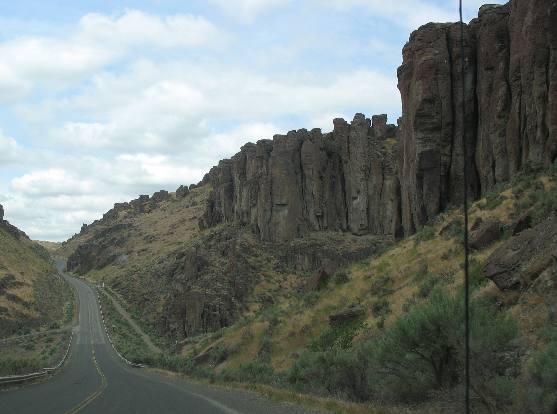
We drove south out of Buhl to see "Balanced Rock". This canyon was on our way. In case you are interested those are basalt cliffs.
Balanced Rock located south of Buhl, Idaho
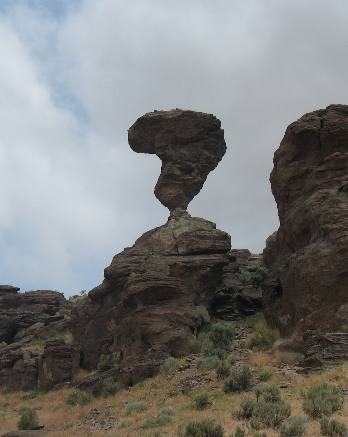
And this is the "Balanced Rock" we drove out to see. It is 48 feet high and 40 feet wide but the base is only 3 feet by 17.5 inches. It is a basalt monolith shaped by differential weathering, if you wanted to know. VBG
Balanced Rock would qualify as a hoodoo as well as a cap rock.
Solid basalt canyon wall south of Buhl, Idaho
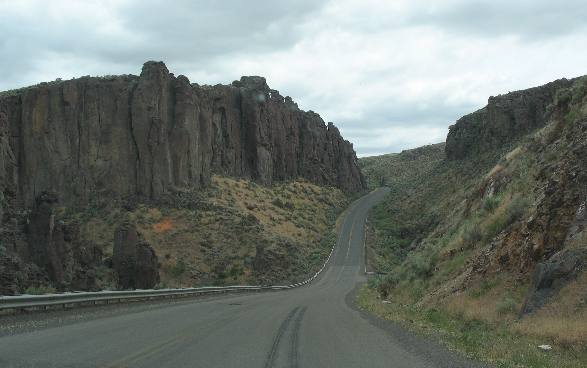
This is another look at that canyon we drove through to get to Balanced Rock.
Keep in mind that the basalt in this canyon wall was once an ancient lava flow. When the lava cooled it created this really hard igneous rock. Lets discuss this as a geology event. When the liquid lava was flowing out of a vent the liquid lava was flowing like other liquids do. In other words it was flowing down hill to the lowest level. So this basalt wall that you now see was once the "lowest" land form around. Weathering has washed away all the softer sedimentary rock. Now this very hard igneous rock (basalt) is the highest piece of ground.
Columnar jointed basalt in a canyon wall south of Buhl, Idaho
This is columnar jointed basalt. We have seen it before at Ft Davis in Texas, at Devils Tower in Wyoming and the Needles in the Black Hills of South Dakota.
Is this pillow basalt?
To me this looks like the "pillow basalt" that was created when hot lava met water. You will recall that pillow basalt is the porous basalt that the water in the Snake River Aquifer flows through.
Click here for more Idaho travellogsUntil next time remember how good life is.
More Idaho AdventuresSome of our Miscellaneous Subjects ** More 2007 Travel Adventures
Mike & Joyce Hendrix
Mike & Joyce Hendrix who we are We hope you liked this page. If you do you might be interested in some of our other Travel Adventures: Mike & Joyce Hendrix's home page Travel Adventures by Year ** Travel Adventures by State ** Plants ** Marine-Boats ** Geology ** Exciting Drives ** Cute Signs ** RV Subjects ** Miscellaneous Subjects
We would love to hear from you......just put "info" in the place of "FAKE" in this address: FAKE@travellogs.us Until next time remember how good life is.
|
|
||

|
|||
|
|
|||
|
|
|||
|
|