Nelson and West Arm Kootenay Lake British Columbia
July 5, 2007.
We are staying in Pair-A-Dice
RV-Park, in Creston,
British Columbia. $26.71 gravel interior roads, FHU including cable. This
is an OK RV Park.

Hotel Ymir in Ymir, British Columbia

This
travelogue is a continuation of travelogue number 104 where we are taking a scenic
drive around Kootenay Lake, British Columbia. We left Creston this morning on
PH 3 heading west. Once over Kootenay Pass we turned north on PH 6 driving north
through Salmo and on to Ymir where we stopped to check out this old hotel. Hotel
Ymir has the distinction of being the oldest, continuously operating establishment
in the region. This grand, old lady, has undergone many restorations since it
began operation in 1896.
As the gold rush was slowing on the Pend
d'Oreille and miners were moving north, gold was being discovered in the
area. Jerome and Joseph Pitre and Oliver Blair were striking it rich in the mountains
around 1895. They staked the first claims of what was to become the Ymir Mine.
With the staking of the Ymir --- mines such as the Dundee, Porto Rico, Tamarack,
Hunter V, Yankee Girl, Blackcock, Wilcox, and others followed.
American
Railroad magnate, D.C. Corbin, decided to build a railroad from Northport, Washington
to Nelson, B.C. This track was laid just north of Quartz Creek. They named the
train station Ymir, after the mountains to the north. With the completion of the
railroad and the staking of the mines, Ymir blossomed as a major mining community.
The Ymir mine alone started out as a forty stamp mill and added another forty
stamps making it the largest stamp mill in the British Empire. Many more miners
came to the area after the railroad was put in and by 1897, the booming town of
Ymir had eleven hotels, a bank, post office, church, public school with grades
1-10, newspaper (The Ymir Miner), police station with jail, blacksmith shop, mine
recording office, mining engineer and assayer, mining broker, notary republic
barber, plumber, physician and surgeon, two hardware stores and a butcher shop.
A waterworks was established in 1897. Ymir boasted a population of 800 in 1897
with another 400 living and working in the surrounding mines.
As well as
mining, may men were employed in logging and the sawmills. By 1904, Ymir had 1,100
residents. In late October of 1904 a massive fire destroyed many buildings and
homes.
After the depletion of the ore Ymir fell on hard times, except for
the war years of 1914 to 1918, when demand for precious minerals increased.
When
WWII began many young miners left to fight in the war and Ymir's population fell
to just 25 people.
Mining is not necessarily finished in this area and
there are no doubt still minerals to be found in the mountains surrounding Ymir
including gold, silver, lead, zinc and tungsten. However, Ymir will probably never
be the prosperous mining community that it once was.
Today, it appears to
us that possibly 50 to 100 people might live in the old mining town and the surrounding
countryside.
Sign across the street from Hotel Ymir in Ymir, British
Columbia
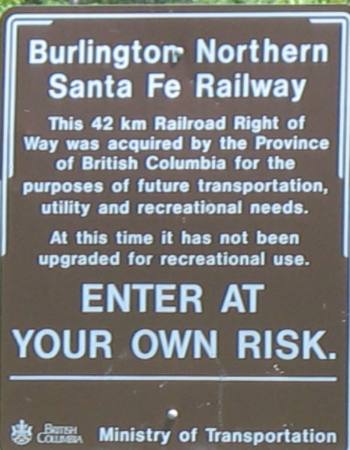
This sign was posted across the street from
the historic Hotel Ymir in downtown Ymir.
The area where it was located looked to be the trailhead for a trail following
that old RR right of way. One thing is obvious, the railroad was here to support
the mining business and when it died so did the railroad.
Continuing
our journey through Ymir we nest came to Nelson
a beautiful artsy community. Nelson is home to a college and as such has attracted
a college town atmosphere coupled with an art colony. It appears Government money
has been infused into the community as Nelson is much more cosmopolitan than other
towns in the area.
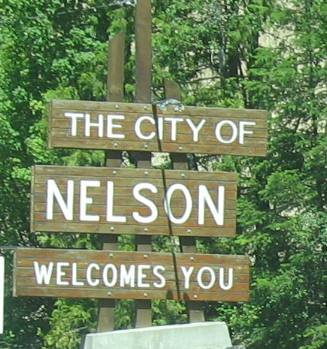
Nelson, British Columbia
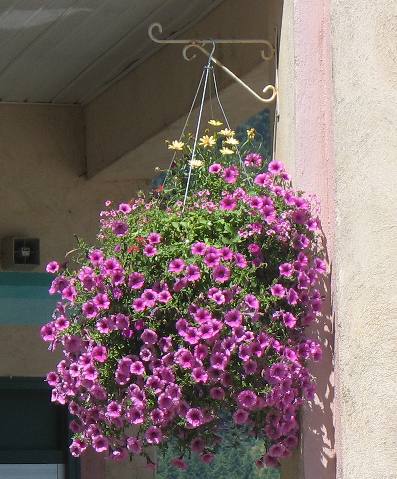
Most
British Columbia towns whether large or small like to display lush flower pots
overflowing with brilliant color. Nelson was certainly putting on a good show
with their flowers.
Like Ymir Nelson, British
Columbia originated as a mining town when in 1886 prospectors, looking for gold,
found high-grade ore nearby. The city was incorporated a year later in 1897. Because
of its location close to both water and rail transportation routes, the city prospered
and grew as as government and commercial center complete with a streetcar system.
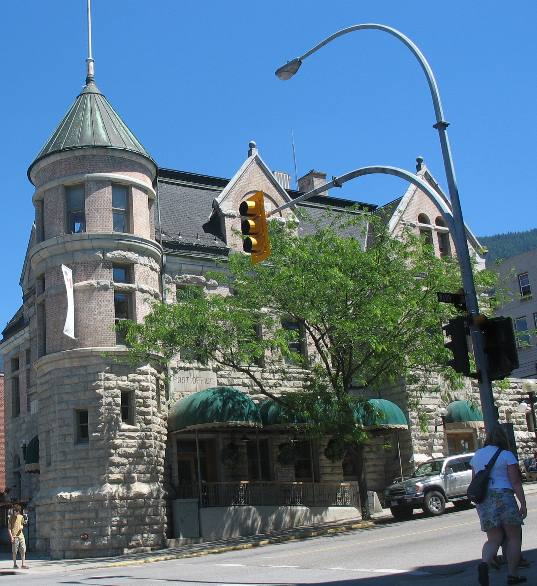
Imposing structures of brick and stone and houses of late Victorian design became
the architectural standard.
That rich past has been beautifully maintained,
and is evident in the well preserved buildings that date back to the town's early
years.
Historic old homes in Nelson, British Columbia
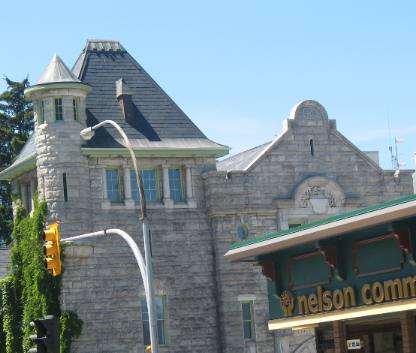
Nelson
is called by many the number one small arts town in Canada, and in the top 5 in
North America. In many ways it reminded us of Telluride, Colorado with the many
outdoor restaurants and young people.
Historic
building in downtown Nelson, British Columbia
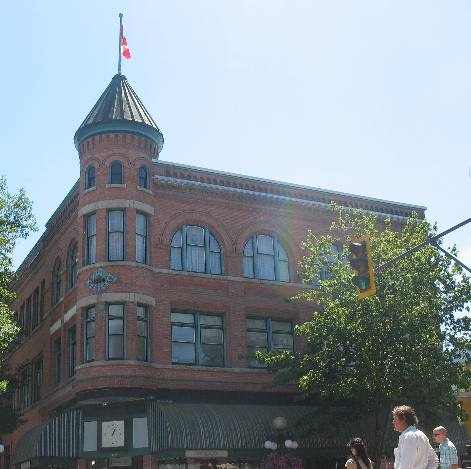
Historic
building in Nelson, British Columbia
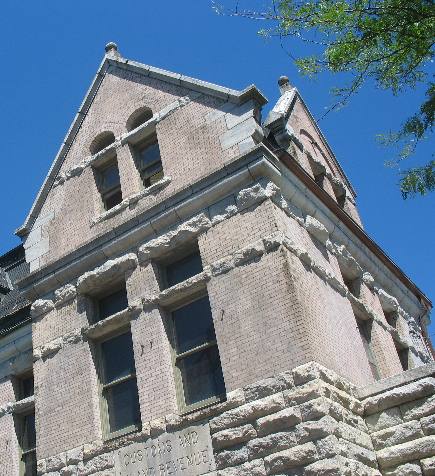
Beautiful flowers are showcased all around Nelson, British
Columbia
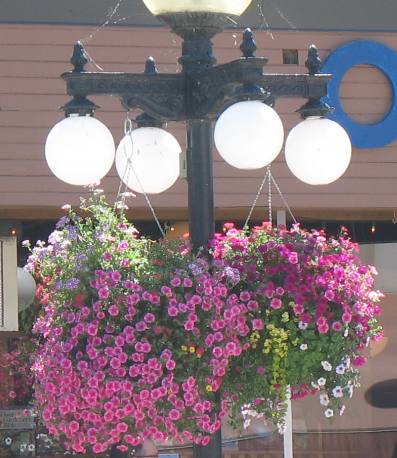
Beautiful
flowers line the streets of historic Nelson, British Columbia.
Colorful
flowers on display in Nelson, British Columbia
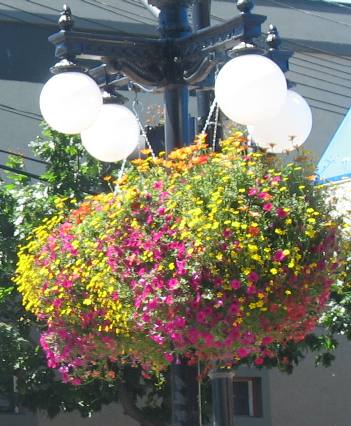
Everyone
in Nelson displays beautiful flowers.
s
Historic
old building in Nelson, British Columbia
Famous Big Orange Bridge over the West Arm of Kootenay
Lake in Nelson, British Columbia
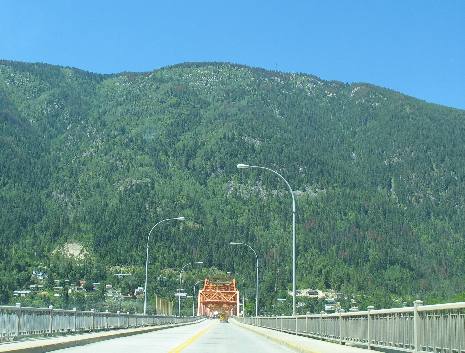
This
is the famous "big
orange bridge" that is found at the edge of the West Arm of Kootenay
Lake. You take this bridge out of Nelson when you are heading to Belfour
to catch the Ferry.
Famous
Big Orange Bridge over the West Arm of Kootenay
Lake in Nelson, British Columbia
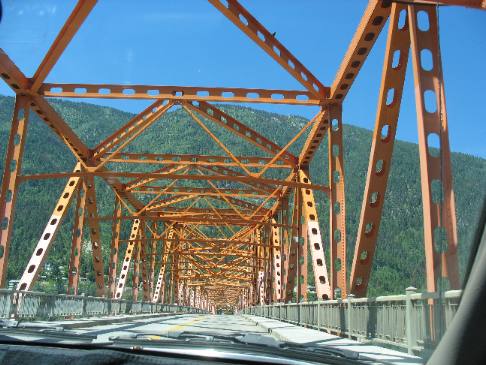
BOB
or Big Orange Bridge over the West Arm of Kootenay
Lake.
Once
out of Nelson we are making our way along the northern side of the west arm of
Kootenay Lake
to Belfour where we plan to take the free ferry back to the eastern side of Kootenay
Lake.
West Arm of Kootenay
Lake Nelson, British Columbia
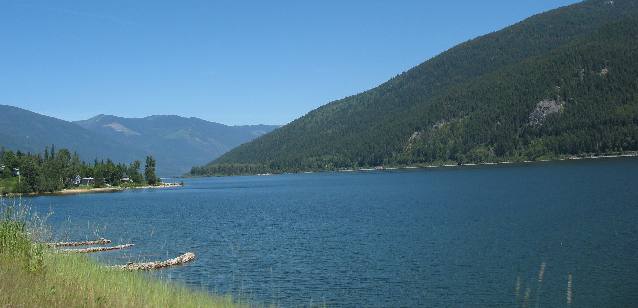
We
are surprised to find people living along the entire northern side of the West
Arm of Kootenay Lake.
The
West Arm of Kootenay
Lake outside Nelson, British Columbia
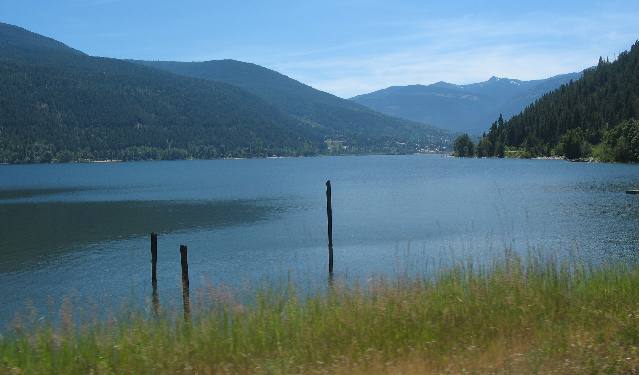
This
photograph is looking back toward Nelson on the west arm of Kootenay
Lake somewhere between Nelson and Belfour.