|
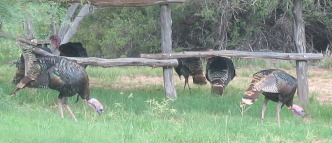
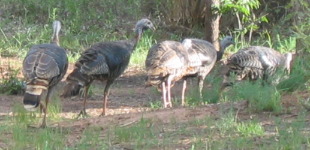
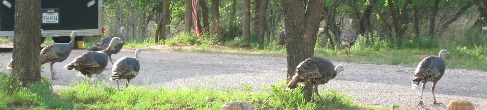
Palo Duro Canyon State Park Places Visited: Texas: Palo Duro Canyon State Park August 17, Palo Duro RV-Park 806-488-2548 Canyon, TX: N34° 58.831' W101° 52.722' $22.50 Full hookups with gravel interior roads and pads & WIFI We stopped for the night in Canyon, Texas about 20-miles south of Amarillo. Palo Duro Canyon State Park is 10-miles east of our RV-Park. We drove out to Palo Duro Canyon in the late afternoon to spot wildlife and watch the sun set on the cliffs of the canyon. Wild Turkey roaming through picnic area and campground at Palo Duro Canyon State Park, Texas
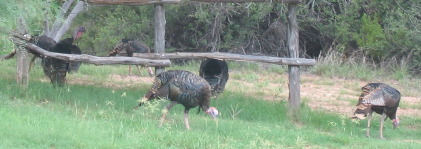
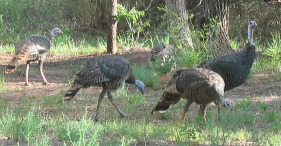
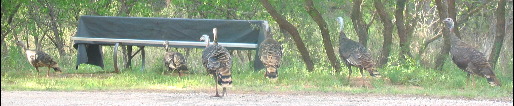
It wasn't long before Joyce spotted a large group of mature turkey feeding in the grass. When turkey are feeding they cover a lot of ground wandering around pecking at this and that but always on the move. Images from inside Palo Duro Canyon State Park, Texas
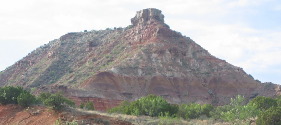
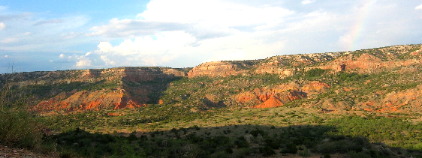
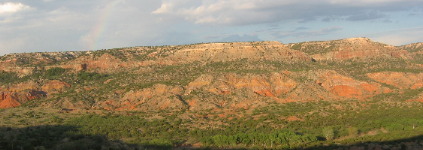
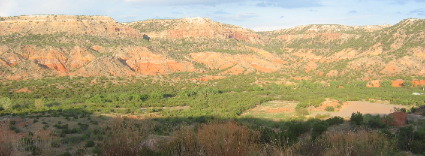
Palo Duro Canyon is a place where erosion shaped the land. From time to time we stopped watching wildlife to look up at the canyon walls. One side of the canyon was in the shade while the setting sun had the opposite side bathed in light. Palo Duro Canyon is approximately 120-miles long and 600 to 800 feet deep. It is the second largest canyon in the United States. The canyon was formed less than 1-million years ago when the Prairie Dog Town Fork of the Red River first carved its way through the Southern High Plains. The rocks exposed a geologic story which began approximately 250-million years ago, layer by layer revealing a panoramic view of magnificent color. The canyon's archeological and ethnological treasures suggest about twelve thousand years of human habitation, rising and waning as climate varied among periods of abundant moisture, aridity, and sometimes fearfully severe drought.
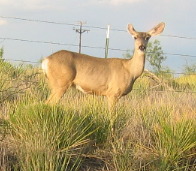
Mule deer near Palo Duro Canyon State Park, Texas
Mule deer and the ever present yucca. The Red River War forced the Southern Plains tribes to surrender and return to reservations in Oklahoma. This opened the land to settlement. From 1876 to 1890 most of the canyon was part of the JA Ranch operated by Col. Charles Goodnight. After Civil War service as a Texas Ranger, Goodnight and Oliver Loving blazed the Goodnight-Loving trail from North Central Texas up the Pecos River through New Mexico into Colorado. From 1866 to 1871 he and John Chisum trailed thousands of cattle to New Mexico. The JA Ranch reached its peak in 1885 with a total land area of over 1,325,00 acres of land and 100,000 head of cattle. In the fall of 1878 a large group of Comanche and Kiowa left their reservation near Fort Sill, Oklahoma Territory, and headed for Texas to hunt buffalo. Heading toward traditional hunting grounds at Palo Duro Canyon they found the buffalo gone, replaced by Goodnight cattle. Hungry and disappointed, they soon began slaughtering JA cattle. Goodnight rode immediately to the Indian camp to seek a solution to the problem. He was met by Comanche Chief Quanah Parker; the two agreed to meet the next morning at the ranch house where they negotiated a treaty. The treaty held until Quanah Parker led the group back to the reservation. Wild Turkey in Palo Duro Canyon State Park in Texas
Groups of turkey seemed to be everywhere. The normal roadrunners and quail were not to be seen. Deer and rabbits were hiding as well.
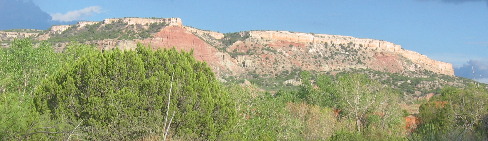
Palo Duro is Spanish for "hard wood" in reference to the Juniper trees common throughout the canyon. Other common tree species seen in the canyon include mesquite, cottonwood, salt cedar (an invasive introduced species), willow, western soapberry and hackberry. Sage brush, yucca and prickly pear cactus are other common plants in the canyon. Palo Duro Canyon is billed as the "Grand Canyon of Texas." The state park consists of 18,438 acres of the canyon. The Civilian Conservation Corps (CCC) sent seven companies of young men and military veterans to Palo Duro Canyon from 1933 until 1937 to develop road access to the canyon floor as well as the visitor center, cabins, shelters and the park headquarters. The CCC's handiwork can be seen throughout the park to this day. Canyon walls from inside Palo Duro Canyon State Park, Texas
Shadows combined with the setting sun highlighting the red cliffs of Palo Duro Canyon make for eye appealing scenery. Palo Duro Canyon played a prominent role in the old west. The battle of Palo Duro 1874-1875 was the decisive battle in the Red River War and was the final military campaign against the Southern Plains Indians. Led by Colonel Randal S. Mackenzie, the 4th U.S. Cavalry descended a narrow zigzag trail into the canyon and attacked the first of five encampments of Comanche, Kiowa and Cheyenne. In the panic that ensued, the cavalry captured over 1,400 horses and burned the teepees and winter stores. Keeping only the horses he could use, Colonel Mackenzie ordered the remaining 1,100 shot. Although only four Indians were killed, the coming winter without food or horses meant starvation. They returned on foot to the reservation at Fort Sill, abandoning forever the life of the hunt. Wild Turkey in Palo Duro Canyon State Park, Texas
Turkey were wandering through one of the campgrounds in the State Park.
Wild Turkey in Palo Duro Canyon State Park, Texas
Images from inside Palo Duro Canyon State Park, Texas
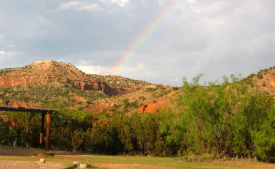
A brief shower put enough moisture in the air to form a beautiful rainbow that seemed to rise out of the canyon wall.
Mule deer near Palo Duro Canyon State Park, Texas
This large mule deer was grazing just outside the gate to Palo Duro Canyon State Park.
Click here for some Texas travellogsUntil next time remember how good life is. More Texas AdventuresAdventures by State ** More 2006 Travel Adventures
Mike & Joyce Hendrix
Mike & Joyce Hendrix who we are We hope you liked this page. If you do you might be interested in some of our other Travel Adventures: Mike & Joyce Hendrix's home page Travel Adventures by Year ** Travel Adventures by State ** Plants ** Marine-Boats ** Geology ** Exciting Drives ** Cute Signs ** RV Subjects ** Miscellaneous Subjects
We would love to hear from you......just put "info" in the place of "FAKE" in this address: FAKE@travellogs.us Until next time remember how good life is.
|
| ||
|
| |||
|
| |||
|
|