|
Sarasota & Boca Grande, Florida Places Visited: Florida: Sarasota, Boca Grande, Florida. Thursday, March 6, 2003 Sun-N-Fun RV-Resort Sarasota. $38.05 per-night. Full hookup 30-amps with every amenity imaginable. Joyce had us scheduled to tour an orange juice processing plant this morning then head to Siesta Key to eat and do some sightseeing. Albritton Fruit Company of Sarasota offers free processing plant tours on Mondays and Thursdays. You never know what to expect from a processing plant tour but this was a good one. The Albritton Family specializes in producing "fresh orange juice" and markets that product within a 100-miles or so of Sarasota. However, they also ship fresh fruit all over the world. Fresh juice has to be sold within 17-days thus has a relatively short shelf life. Transportation costs prohibit marketing it in a larger area. Before explaining the juicing process some interesting information about citrus is called for. Citrus is not a native plant and was not here until the arrival of Christopher Columbus. In 1942 Florida surpassed California as the leading orange producing state in the USA. Today, Florida still crushes California with orange exports. Temple oranges and Murcott tangerines have so much sugar in them that they will sink if dropped in water. All other oranges will float. Unlike apples, pears and bananas, oranges will not ripen any further after being picked from the tree. Oranges are called seedless when they have five seeds or less. Grapefruit was discovered in the West Indies in the early 1700s and first introduced to Florida in the 1820s by a French explorer. In 1914 the world's first pink grapefruit was discovered in the town of Palmetto, north of Bradenton, Florida. Different varieties of citrus arrived in Florida over the years. Sweet oranges were brought from Spain to Florida in the 1500s they were the first ones. Grapefruit arrived around 1820. Mandarin oranges came from the Far East in the 1840s. Navel oranges came from Brazil about 1835 and finally Valencia oranges came from Spain and England in the mid to late 1800s.
Now we can get down to making orange juice. Workers handpick the fruit. Once the sugar content is where the grove owner wants it workers enter the grove and pick every fruit on each tree. Large 18-wheel semi-trucks carry the fresh picked oranges to a processing plant where the oranges are mechanically washed then visually inspected. Inspectors remove undesirable fruit. Only top grade fruit is allowed to make it to the juicer. The juicer is a machine that puts a top and bottom "cup" around the orange, cuts a core through the orange then squeezes the juice out of it. Pulp peels and other residue of the juicing process are valuable as cattle feed. Up until this point most juicing plants will be identical. Since this plant just produces "Fresh Squeezed Juice" we see the extracted juice flowing through two clear pipes to a large cooling tank where the temperature of the fresh juice is dropped to 35-degrees. From that tank it is pumped into 1-gallon plastic containers and labeled. End of process! The fresh juice could have been "Pasteurized" or "fresh frozen" or it could have gone through a "concentrate" process where most of the water is removed from the juice by vacuum and heat, then chilled, to yield frozen concentrate. If you ever visit an area where a juice processing plant is providing a tour it is very informative. We certainly enjoyed our tour. If you are interested Albritton Fruit Company ships fresh citrus all over the world and can be contacted at 1-800-237-3682. Siesta Key was our next destination. Joyce wanted to lunch at one of the quaint eateries on Ocean Boulevard. After dining we slowly cruised the myriad roads on Siesta Key each leading from palatial estate to palatial estate. Like on the other Islands giant condominiums line the Gulf side while individual villas are packed into the interior and bay side. Perfectly landscaped yards with lush tropical plants adorn each estate. At the southern end of Siesta Key is "Gulf Beach Campground" right on the Gulf with rates exceeding $55 per-night during the winter season. If beachfront is what you want this is the place. RVs are packed in like sardines. During the summer tents may get in the park for around $20.
On Siesta Key we noticed nesting Eurasian collared doves. This is an introduced species that has taken hold in many communities. I have several bird books that do not even show this bird yet we see them regularly. The book that does include the Eurasian collared dove indicates they nest up to 6-times per-year and like to be around population centers. The active nests we saw on Siesta Key were in trees between the sidewalk and street right in front of busy restaurants. We saw other active nests in the small trees in a grocery store parking lot near our RV-Park. None of the nest are over 10-feet off the ground. The Eurasian collared dove looks much like a common morning dove but it is larger and has a broad white stripe on the tail that is easily visible in flight. It also has a black ring around the neck. Friday, March 7, 2003 Sun-N-Fun RV-Resort Sarasota. $38.05 per-night. Full hookup 30-amps with every amenity imaginable. Sightseeing, gawking and ogling was the order of the day. Driving our Saturn we headed south from Sarasota to Gasparilla Island and the community of Boca Grande. The $3.50 toll bridge was a harbinger that we were entering hoity-toity territory. That toll pretty well culls the riffraff. Boca Grande is an "island paradise" complete with tropical breezes, fragrant blossoms, exotic wildlife, luxurious foliage picturesque avenues and beautiful vistas. It would be hard to beat this place short of heaven. Like the other islands in the area this one has its share of palatial estates. Boca Grande is known for world-class tarpon fishing. It also sports miles and miles of bicycle paths and golf cart paths that connect most of the island. Bicycle trails are the result of Florida's "rails to trails" program where old railroad right of ways are turned into trails. It appears there are separate paved paths for bicycles and golf carts. Gasparilla Island bike paths follow the railroad right-of-way that was built to transport phosphate mined a short distance inland to the deep-water harbor located on the extreme south end of the Island. This is nesting season for osprey and nesting platforms on the island are occupied. On Boca Grande everyone gets into the act and provides a nesting place for osprey. All ospreys require for nesting is a tall telephone pole with a 3-foot square platform on top. Posh estates sport their own prominently displayed osprey nest. Florida Power and Light and other utility companies attach platforms to their poles so that the road leading into Boca Grande is dotted with osprey nests. Boca Grande is a quaint little laid back community with nifty shops and eateries. You will not find chain restaurants on the island.
Of particular interest is Banyan Street located within a block of downtown Boca Grande. The street features banyan trees planted along both sides of the street back in 1914. Those huge banyan trees now form a canopy over the street that is breathtaking to see. As you approach Banyan Street it looks as though you are entering a tunnel. We spotted several iguanas on Gasparilla Island. It made us feel as though we were on Easter Island. Iguanas are not native to Boca Grande so obviously someone lost a pet and now they are part of the island wildlife. Island literature says they are Mexican spiny tail iguana and that they won't hurt you. Each April thousands of tarpon migrate into Boca Grande Pass. This event is why Boca Grande is known as the "Tarpon Capital of the World." It is estimated that tarpon fishing pumps more than $4 million into Boca Grande's economy annually. Tarpon are not edible and the fishery is only catch-and-release. For those wanting a mount of their monster tarpon the guide will measure the fish in the water and a fiberglass mount can be made from the measurements. The island is a get away for the rich and famous including the Bush Family who vacations here in the Gasparilla Inn. While on Boca Grande we purchased the local newspaper "Boca Beacon" with this headline "Exclusive Coral Creek Club Closes" the article goes on to say "The exclusive Coral Creek Club, located just beyond the causeway in Placida, which includes former President George Bush and a large number of Boca Grande residents among its members closed its doors Feb. 28." "Membership fees were $135,000 annually with a cap of 275 members that must be invited to join the private club." That little tidbit of information should give you an idea of the lifestyle of Boca Grande residents. Our friends Dale and Cheryl wanted us to eat at Miller's Marina but it was closed. It seems someone purchased the marina and promptly closed the marina and restaurant. Never to worry we found "Dolphin Cove" in the village and it was just fine. This was karaoke night again at Sun-N-Fun but this time it was outside by the pool and bar. These folks like their karaoke. There were several hundred folks around the pool listening and dancing. Like Monday night the "professionals" were out in force. It would be hard to beat this talent anywhere and it was free. Joyce and I are going to miss the amenities and activity we have become accustomed to while at Sun-N-Fun. They have won me over. I actually feel as though I am getting my moneys worth. Saturday, March 8, 2003 Sun-N-Fun RV-Resort Sarasota. $38.05 per-night. Full hookup 30-amps with every amenity imaginable. This was our day to get ready to head home. Even when having fun the motorhome and Saturn must be cleaned inside and out. Laundry is something else that has to be dealt with. Between the onerous cleaning jobs we walked around the park watching residents engaged in a variety of activities. At the large lake in the park a group of men were having remote control sailboat races. They were having a great time as was the crowd watching. The course was a set of buoys strategically placed in the lake. A different course was selected for each race. An official tape recording conducted the start that sounded just like the start of "real" sailboat races. The lawn bowling courts were full as were the horseshoe and shuffleboard courts. We peaked in the exercise room and it was well utilized as well. With the wonderful weather everyone was out enjoying outdoor activities. Of course the pool and hot tubs were the number one activity. Sunday, March 9, 2003 We drove 395-miles from Sarasota to Panama City Beach PineGlen RV-Park Panama City Beach $25 per-night. There is not much to say about driving 395-miles. However, we did drive the Sunshine Skyway over Tampa Bay between St. Petersburg and Bradenton. That is one fantastic bridge! RV'ers need to know that there are public parks and fishing piers on both ends of the bridge large enough for RV's. Monday, March 10, 2003 PineGlen RV-Park Panama City Beach $25 per-night. We spent the day with Family in Panama City. Tuesday, March 11, 2003 We drove 87-miles from Panama City Beach to our home in Pensacola. Home in Pensacola. We are home for a few weeks or longer.
Click here for more Florida travellogsUntil next time remember how good life is. More Florida AdventuresAdventures by State ** 2003 Travel Adventures
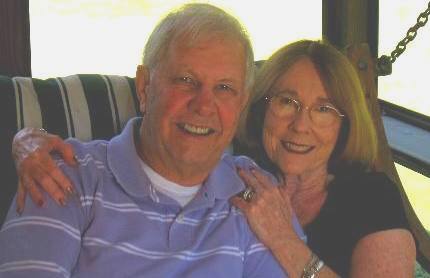
Mike & Joyce Hendrix
Mike & Joyce Hendrix who we are We hope you liked this page. If you do you might be interested in some of our other Travel Adventures: Mike & Joyce Hendrix's home page Travel Adventures by Year ** Travel Adventures by State ** Plants ** Marine-Boats ** Geology ** Exciting Drives ** Cute Signs ** RV Subjects ** Miscellaneous Subjects
We would love to hear from you......just put "info" in the place of "FAKE" in this address: FAKE@travellogs.us Until next time remember how good life is.
|
| ||
|
| |||
|
| |||
|
|