|
Taos, Eagle Nest, Enchanted Circle, Angel Fire, Red River, Cimeron River Canyon, Chimayo, Cordova, Velarde, Truchas, Las Trampas, Chamisal, Penasco & Ranchos De Taos in New Mexico Places Visited: New Mexico: Taos, Eagle Nest, Enchanted Circle, Angel Fire, Red River, Cimeron River Canyon, Chimayo, Cordova, Velarde, Truchas, Las Trampas, Chamisal, Penasco & Ranchos De Taos July 2, 2003 Taos Valley RV Park. Taos, New Mexico. $33.34 per-night. $1.00 per-connection charge for modem use 15-minute max. Park is NOT recommended. Don't forget that I am still bad-mouthing Taos Valley RV-Park and am still steamed at their policy of charging $1.00 each time you connect up your modem with a 15-minute time limit. Our neighbors are grousing because they charged them $3.00 a head for each of their children. None of us on the "hill" have level spots. This was our day to drive the "Enchanted Circle". Some may not be familiar with the "Enchanted Circle" but everyone in this part of the country is. Wheeler Peak is the highest mountain in New Mexico at 13,161-feet. The Enchanted circle is a series of roads that make an 85 mile circle around Wheeler Peak. A number of small towns are along the route and they may be the best way for you to locate the Enchanted Circle on a map. Start with Taos in the southwest corner, head east on US-64 through Angel Fire and on to Eagle Nest on the eastern quadrant. Then from Eagle Nest take New Mexico 38 to Red River on the northern quadrant and on to Questa on the northwestern corner. From Questa take NM 522 to US 64 and back to Taos. The entire drive is recognized as a Scenic Route in virtually every publication listing Scenic Routes. Angel Fire and Red River are both small towns that seem to revolve around winter activities such as snow skiing and snowmobiling. Red River is by far the larger with a "strip" that reminds me of a small Panama City Beach. Red River, Eagle Nest, Angel Fire and Taos all have RV-Parks. Very few of the RV-Parks have shade although we did see several on the outskirts of Red River that did. The route took us over two major passes one between Taos and Angel Fire where US-64 climbs over 9,101-foot Palo Flechado Pass. Between Eagle Nest and Red River New Mexico 38 climbs over 9,820-foot Bobcat Pass, the highest highway pass in New Mexico.
Shortly after leaving Taos on US-64 we ran across sculpturer Doug Scott's place of business. Doug was outside in the shade carving the beak on a beautiful eagle he had chiseled out of marble. We watched and talked with Doug as he worked. His most famous piece was of Roy Rogers and Dale Evans. That piece is at the Roy Rogers & Dale Evans Museum that is in the process of moving from California to Branson, Missouri. As far as things to see and do on the Enchanted Circle this is one of the more interesting ones. His gallery was intriguing. Several pieces were not finished. Those had signs with something to the effect of "hire me to finish this piece". Check out his work on the net at "themarblesculptor.com". Angel Fire appeared to be a town built around a ski lift. It is not a big community. We drove out to the ski lift and watched as mountain bikers were loaded on the lift for a ride to the top. Other bikers had completed their downhill run. Angel Fire is also noted for the Vietnam Veterans National Memorial, the first memorial to Vietnam veterans anywhere. Work began on the Memorial in the fall of 1968 following the death of Dr. Westphall's son. In Vietnam history, 1968 was the year of the Tet Offensive. That same year, the largest number of anti-war protests took place in the United States. Building a Monument to honor Vietnam veterans was not popular at the time; however, the Westphall family persevered and in 1971, the Chapel was dedicated. In the beginning Dr. Westphall, locked the entrance door each evening. One morning he found a message written on a piece of scrap plywood that asked, "Why did you lock me out, when I needed to come in?" Since that time the Chapel doors have never been locked. It may be the only public building in the nation that is never locked. The Vietnam Veterans Memorial is one of the things you need to take time to do when near Angel Fire. It is a moving memorial to a troubling era. You can meet the founder, Dr. Westphall in his office where more memorabilia is displayed. He will be glad to shake your hand, share a few words with you, and autograph "David's Story", if you wish. David was his son. In Eagle Nest we took a side trip east on US-64 through the Cimarron River Canyon. This was a truly spectacular drive. The Cimarron River has cut a remarkably deep canyon for about 7-miles east of Eagle Nest. Fishermen lined the 6-foot wide Cimarron River along 3-miles or so where the River exits the spectacular canyon. Several RV-Parks are located along US-64 about 7-miles east of Eagle Nest. I think we saw several State Park campgrounds and at least one private one. All were full or nearly full, remember that this is the 2nd of July and the 4th of July holiday is upon us. RV's of every description were pouring into the area all day. Everyone is trying to get to a higher elevation especially Texans. Eagle Nest Valley at 8,000-feet elevation has a lake that is popular for summer sports and winter ice fishing. For those of you in Pensacola the lake is about the size of Bayou Texar. Up here it is a "big deal"! Any water around here is a big deal much less a lake that you can put a boat in. The water in the lake is way down. From the looks of the beach area surrounding the lake it could easily hold 20 more feet of water. I asked our waitress where the eagle nest was. She did not know but said she saw an eagle last year so there must be one around. The nest is not near the lake. There are no trees near the lake much less one large enough to hold an eagle's nest. I read somewhere that the town was named for Golden Eagles that nest in the mountains. Just north of Eagle Nest is the remnants of Elizabethtown a long abandoned gold mining town from the 1860s. At one time in the 1860s over 5,000 people lived here. Now all we can see is the skeleton of one large rock & mortar building plus several foundations. There is a small museum where Elizabethtown once was but we decided to keep driving. If you have time and are in the area I bet that the museum would be interesting. Red River looks like it would be a great vacation place in the winter. Ski lifts start just off Main Street and head up the mountain. Skiers can obviously ski down to their rooms or lunch. A summer sports place was advertising jeep rides. Another place featured horse back rides. Lifts were taking mountain bikers to the top for an awesome ride down. Between Red River and Questa massive scars on the face of a large mountain north of the highway are from a large molybdenum mine. According to Webster's molybdenum is "a metallic element that resembles chromium and tungsten in many properties, is used especially in strengthening and hardening steel". The mines have shut down until molybdenum prices rise.
Also between Red River and Questa is a Fish Hatchery run by the state of New Mexico. According to information in the fish hatchery there are MANY more fishermen in the state than can be satisfied with a natural spawn. The state maintains large adult trout at the hatchery then strips the eggs from the females and fertilizes them with milt from the males. By artificially fertilizing the eggs they are able to raise thousands upon thousands of trout. Although they release some trout as fingerlings the vast majority are fed at the hatchery until they reach 9-inches (a legal trout in New Mexico). The now legal trout are then introduced to rivers in the area where throngs of fishermen wait for the truck to arrive. From what I can see these trout have a life expectancy of minutes after being released. One small note for my good friend "Hunter". We have looked high and low for Fred's Place. I have saved Hunter's travelogue from when she was through this area and described Fred's Place. Well Hunter, Fred's place is no longer here or at least it is not in the phone book and we can't find anyone who remembers the place. Too bad. It sounds like my kind of place. VBG! July 3, 2003 Taos Valley RV-Park Taos, New Mexico. $33.34 per-night. $1.00 per-connection charge for modem use 15-minute max. I continue to bad-mouth Taos Valley RV-Park every chance I get. Stay in Red River not Taos. One fellow in the next row was borrowing blocks from everyone in an attempt to get level. You can bet I was out stirring the pot. Now that we have been in Taos a few days it is time to share some of the area history with you. Taos was the northern most Spanish settlement and was located at the end of the Camino Real or "Kings Highway" that brought Spanish settlers from Mexico north into what is now New Mexico. From Albuquerque the "Kings Highway" headed north to Santa Fe then Espanola and finally Taos. In addition to these towns a host of other small settlements are scattered along the way. Spanish settled in areas that had a year around supply of water. Without a reliable supply of water they could not exist. The northern reaches of the Camino Real was bordered on the east by the Sangre de Cristo Mountains (southern extremity of the Rocky Mountain Chain). Snow melt and springs feed creeks that flow through a maze of valleys. These valleys with streams (rivers) supported agriculture thus settlement was in these valleys. In each valley water is diverted for irrigation so that only a small part of the normal flow reaches the Rio Grande. Annual precipitation varies from about 8 inches in the lower valleys to 20 inches or more in the mountains. The high mountains constitute the watershed and usually have heavy winter snows that are the primary source of water. Residents of the villages of Chimayo, Cordova, Velarde, Truchas, Las Trampas, Chamisal, Penasco and perhaps a half-dozen more are descendants of Spanish families who settled the region prior to 1800. Because of the isolation of the little communities, people from different villages had distinctly different characteristics. So much so that researchers in the 1930's made note of those differences. They speak an archaic Spanish that is no longer used in either Spain or elsewhere in Latin America, although most are also bilingual and can converse with you. Only recently has there been any influx of Anglos. Crops vary from valley to valley. Chimayo, in its warm valley, concentrates on chili. Truchas in the highlands has a preponderance of wheat. Velarde and Cordova are protected from frost by high mesas. They concentrate on fruit. Chimayo is also noted for weaving and geophagy (I'll explain that later). The Civil War (1861-1865) had little effect on these mountain villages. However, it did bring a market for livestock and more importantly it introduced a money economy, where only a barter economy existed.
By 1875 these subsistence farms were becoming overcrowded. In the 1870s the railroads brought relief and changed things. Railroads were being constructed in the area and were paying high wages. Men who wanted work had it at $1 per-day for a 12-hour day and that was unbelievably high wages for the time. With the introduction of "wage work" and "cash-income" an increasing percentage of the male population left to work elsewhere. They worked for the railroads, miners, smelter workers, shepherds, or farm laborers. By the end of WWI outside wages became the chief source of income instead of supplemental income. Houses in these villages look much as they did in the 1800s. The chief difference in appearance is an automobile in the front yard. Many buildings from the 1800s are still in use. Four miles south of Taos is the village of Ranchos De Taos where we stopped to shop in the village shops and inspect the very old St. Francis of Assisi Mission Church. This famous church was built in 1710. It took 45-years for parishioners to complete the massive adobe structure. Current parishioners have done a remarkable job of restoring and maintaining the church. As was customary the mission is built in the middle of a plaza surrounded by a continuous row of homes. These homes are centuries old now and for the most part have been converted into shops selling everything from this to that. This Mission Church is purported to be the most photographed church in New Mexico. The walls at the base are from 8 to 13 feet thick. They were constructed like that to withstand Indian attacks. While Joyce was shopping I struck up a conversation with Jack, a local, who just happened to be a member of the parish and was born in one of the homes surrounding the church. His wife had a gift shop in the house he was born in. Jack was allowed to sit outside and talk as long as the gift shop was not busy. If things got busy the Mrs. would call "Jack" where upon my friend hustled inside until things got slow again. Jack spent some time on the answering end of my game of 1,000 questions. Jack was just the fellow I needed to sit down with because he knew the answers to my questions and enjoyed educating me as much as I enjoyed learning from a master. Jack explained adobe to me. Adobe is one of the basic building materials in this part of New Mexico. Joyce and I can recognize adobe bricks that were used in construction long ago. Today they still use adobe bricks (mud & straw) formed in wooden moulds. This mixture is allowed to dry in the sun as opposed to Anglo bricks that are fired to make them hard. Adobe bricks are "mortared" together with plain mud (no straw). To protect the bricks from the effects of rain adobe bricks need to have "plaster" applied annually. Plaster is just adobe (mud & straw) that is applied to the bricks like plaster would be applied to other structures. Rain washes away the "plaster" so adobe buildings require annual "replastering". The adobe "bricks" we have been seeing in some of the older more rundown buildings were examples of where annual replastering had not been accomplished. Over time the bricks will be destroyed. Each year the during the first two weeks in June, parishioners of the Old St. Francis of Assisi Mission Church in Ranchos De Taos gather together and replaster the entire church plus the adobe wall that goes around the courtyard at the entrance. It must be some kind of job. Jack said that some were skilled at mixing mud and straw while others were skilled at applying the wet adobe. Women of the congregation supply food. I could not help but think that someone reading this travelogue might be interested in stopping by in June and helping with the replastering job. It might make a good mission project for a group from some well-healed church. It any event it would be something exciting as well as interesting and beneficial. Additionally, I am sure you would make some good friends. If you are interested in helping them I would suggest doing an internet search for Ranchos de Taos, or possibly just plain Taos. If that does not work I have a receipt from Jack's wife's shop that probably has a phone number. One other thing. I asked Jack if he knew anything about "Fred's Place". He laughed and said the place had closed. Then he wanted to know how I knew about Fred's Place. That is when I laughed and told him a good friend had described the place. He laughed again and said "they must have been a GOOD friend". I responded with a VBG (Very Big Grin) yea! Inside the Mission Church it was so cool it felt like it was air conditioned. Jack told me that being cool in the summer and warm in the winter was a characteristic of adobe. It was 96 degrees outside today yet the inside of that church was cooler than other buildings with air conditioning. After touring the church and all the shops around it we headed south to Espanola where we returned to Taos over what is known as the "high road to Taos". That route is designated as a "Scenic Route" in several books. It is scenic not so much for the geology but for the history. Along the route are a number of villages left over from the Spanish settlements and missions from the 1700s. It is these villages that make this a "scenic drive". Heading north from Espanola we started going through a series of those historic old villages in the mountain valleys. Like I said earlier each is unique in its own way. All look like they are stuck in an 1800s time warp. Chimayo was the first village. It is a valley about 4-miles long varying from a few hundred yards wide to over a mile. It was settled in the early 1700s by the Spanish. Chimayo is know for weaving. The Ortega family of weavers goes back to the early 1700s when residents of Santa Fe requested Spain send over experienced weavers to teach the skills of the craft to the new world settlers. Two brothers, both skilled weavers, made the journey and settled in Chimayo where they taught their craft to locals. Now the seventh and eighth generations of Ortega's continue the weaving tradition. Most of the weaving today is done in the homes of local families with names such as Garcia, Martinez, Rodriguez, Trujillo, and Valdez. Ortega still has an outlet where weaving and sewing are performed daily. We did not visit or see the church in Chimayo but we should have since it is famous and has a story that is unique. The famous church, the Santuario de Chimayo, was built by Don Bernardo Abeyta between 1813 and 1816. Legend tells that Abeyta was very ill when a vision led him to the site of the church, whereupon he was immediately cured. Filled with gratitude, he built the small sanctuary. Now the plot thickens! Geophagy, or clay eating, and the use of clay in cooking is practiced in some places. It is found in many parts of the world and is still practiced by the Mayan and Mexican Indians. However, the custom of "earth-eating" in connection with pilgrimages to a Catholic shrine is found only in the little Spanish Village of Chimayo and you guessed it the Santuario de Chimayo is the Church. Each year thousands of Indians and Hispanos visit the Santuario in Chimayo to partake of the blessed earth, terra bandito, found in a pit in a chamber to the left of the main altar. The earth is supposed to contain great medical powers that can cure pains, rheumatism, sadness, sore throat, paralysis, and is particularly useful during childbirth. Pilgrims carry back samples of this earth in bottles or handkerchiefs to give to friends and relatives at home. The blessed earth is dissolved in water and drunk or is smeared over the ailing part of the body. Webster's defines geophagy as "a practice in rural or preindustrial societies of eating earthy substances (as clay) to augment a scanty or mineral-deficient diet". Now that I am back at the motorhome writing this I wish we would have taken the time to locate this church. I would be interested in seeing the "pit" by the altar where the earth is taken from. One piece of writing on the church states that "the anti room is lined with crutches and braces. Letters of thanksgiving attest to the curative power of the holy mud." The big pilgrimage is supposed to take place during Easter if any of you are interested. There is just too much to see and do and so little time, it was our mistake to cut this from our agenda
Next we exited NM-76 and took a side trip into the valley of Cordova. We were interested in the town of Cordova since we live in "Cordova Park" back in Pensacola. This Cordova has been rated as the most picturesque of the Spanish colonial villages. The village occupies a strip of land about 2 miles long on both sides of a creek (they probably call it a river). This was a village of fruit orchards and wood carvers. The trees in this valley reminded us of back east. I was apprehensive while driving through the village because roads were barely wide enough to be one way but were two way. The automobiles I was meeting head on were of ancient vintage with drivers not at all concerned with engaging in another crash. I was relieved when we returned to NM-76. Then it was on to Truchas. The village is at an elevation of 8,000 feet on the edge of a 500-foot canyon that overlooks a beautiful mountain valley. For protection against Indians the town like others in the area was built to specifications set down by the Spanish colonial government. Adjacent houses were joined together in a square with an open center. Only one entrance was provided that was wide enough for a single cart to pass through. This is one of the places that truly looks like it fell right out of the 1800s. You actually may have seen the village before. Robert Redford selected Truchas for his movie, the Milagro Beanfield War. Much of the film was also shot in Chimayo. I can attest to the fact that Redford did not have to spend much on props. A man on horseback could ride through the dusty dirt streets here and absolutely no one could tell if it was filmed in the 1800s or today. Further down the road is the village of Las Trampas. The church this village built looked good but not in as good repair as the other one we visited earlier today. I do not think they have replastered this year. Constructed in the latter 1700s it has a unique story. Founded in 1751 Las Trampas was located in the heart of what was once good beaver-trapping country. It began as a walled adobe town built to protect its citizens from Indians who raided the Spanish colonial villages for their stores of grain, cattle, sheep and sometimes the people themselves for use as slaves. The closest church was nine miles away at another village. The community decided to build their own church. Slowly the men constructed the four-foot thick walls then struggled to put the vigas (logs that support the roof) in place. Women mixed adobe and plastered the walls. The result of their labors is magnificent! Even today it is considered one of the best examples of the massive Spanish-colonial mission architecture. It has an outside choir loft and twin wooden bell towers that make it easy to spot in photographs or paintings. I have even seen those twin bell towers in westerns over the years. Even though I did not speak with anyone connected with this church I can assure you that they would appreciate any help they could get when they get ready to replaster. I have no idea how to contact them. Several pieces of literature say that many of these small Spanish-founded villages are centers for the Penitente sect of the Roman Catholic Church. In the past, membership required penance of its initiates, including self-flagellation. The church banned Penitente societies in 1899. Their activities were driven underground until 1947 when the church again allowed Penitente practices, provided that the penances did no physical harm. When reading this I could not help but think that "The-Church" should banish some Priests we have been reading about to one of these villages. On the other-hand its probably best we not go there. As we left Las Trampas I noticed several huge logs held 20 feet or more in the air stretching across a gully approximately 100 feet wide. As we passed by I realized it was a flume. We could see water flowing through the hollowed out logs strung together across the gully. The logs were hollowed out enough for water 12" wide by 8" deep to travel down the flume. The logs were at a sufficient angle to allow a LOT of water to flow down the flume. It was so neat to see that old log flume but I could not help but think that it would be fairly simple and cheap to run the water through a BIG piece of PVC. Then again that log flume may have been around since the 1800's and as long as it works why change it? If it needed replacing today it would be hard to find logs that large and it would be a LOT of work to hollow them out. The last of these villages is Penasco. I think that it was named after the same town in Spain that Pensacola, Florida was named after. I don't know that for a fact but intuition sure points in that direction. Does anyone know where the name Pensacola came from? As if the above was not enough we went to Taos's version of "Music in the Park" where a band was playing in the Plaza. It is always fun to "mingle with the locals" and that is what we did. Taos has more than it's share of "characters". It is an artist community and as such has attracted a large community that is definitely marching to a "different-drummer". Long unwashed hair, body piercing, tattoos, nasty clothes you name it they were flaunting it. It seemed to us that they were having a contest to see who could wear the filthiest clothes, sport the most audacious tattoo or had gone the longest without washing their hair. I think we enjoyed "people-watching" more than the music. Click here for more New Mexico travellogsUntil next time remember how good life is. More New Mexico AdventuresAdventures by State ** 2003 Travel Adventures
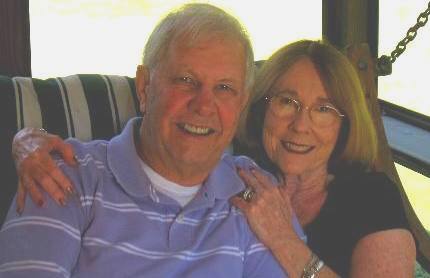
Mike & Joyce Hendrix
Mike & Joyce Hendrix who we are We hope you liked this page. If you do you might be interested in some of our other Travel Adventures: Mike & Joyce Hendrix's home page Travel Adventures by Year ** Travel Adventures by State ** Plants ** Marine-Boats ** Geology ** Exciting Drives ** Cute Signs ** RV Subjects ** Miscellaneous Subjects
We would love to hear from you......just put "info" in the place of "FAKE" in this address: FAKE@travellogs.us Until next time remember how good life is.
|
| ||
|
| |||
|
| |||
|
|