|
Texas: Junction, Rocksprings, Sonora Places Visited: Texas: Junction, Rocksprings, Sonora Wednesday, June 4, 2003 Morgan Shady RV & Camping Resort. 600 S. 6th st. Junction Texas 915-446-2580 Private campground in Downtown Junction on the South Llano River with sites under the shade of 100-year old pecan trees. 30-amps sewer & water. Storm clouds had been building all day yesterday. Finally, around 11:00 last night things lit off. Lightning zapped and thunder rolled through this huge echo chamber for an hour or more. With all the bluster and gusto the area only received .44 inches of rain. We lost power and it did not return until mid-afternoon today. Texas power companies are obviously not prepared for lightning or wind. Back east thunder is dampened by vegetation. Out here sounds reverberate off limestone cliffs and soil for what seems an eternity. It is hard to tell a new clap of thunder from one a minute before. Possibly because Junction is situated at the confluence of two rivers and the associated canyons may have something to do with the echo chamber effect. While all this mayhem is breaking lose outside we began to wonder about our weather radio. It had not warned us about this storm. I got up and fiddled with it but could not find a weather signal on any channel. That was odd since we had listened to a national weather report at a hardware store this afternoon. Why were they able to get national weather and we couldn't? We would learn the answer to this in a few days. We took a scenic drive on US 377 south out of Junction to Rocksprings. For most of the drive US 377 follows the north flowing South Llano River. We stopped to read every historical marker placed along the road. They told of posses tracking outlaws and the shootouts that resulted in the gulches and draws around here. Markers are usually near the spot where the shoot out occurred or the tree where justice was served. Other historic markers commemorated early settlers and their contributions to the community. We stopped in "Telegraph, Texas 76883"; actually Telegraph is a General Store, Post Office and weather station all in one SMALL country store. Telegraph does not have a stop sign much less a traffic signal in fact there isn't even a reduce speed sign, it is just an old store. At one time it formed a nucleus for the ranching country in these parts. Coke R. Steverson a former Governor (1941-1947) of Texas was from Telegraph. City folks used to stop in when visiting widely acclaimed Seven Hundred Springs located between Rocksprings and Junction. Seven Hundred Springs was a myriad of bubbling water spouts. I say was since most of the springs have dried up as the water table has dropped. Telegraph was named for the canyon where they cut early "telegraph-poles". Telegraph never actually had a telegraph. How about that for a piece of history?
In 1853 President Franklin Pierce appointed Jefferson Davis to serve as Secretary of War. Davis introduced the famous camel experiment at Camp Verde, thirty or so miles east of here. Among Davis's other ingenious ideas for improving the army was a plan to connect the frontier forts by telegraph lines. Now you know where I am going with this story. Near the "Telegraph" general store is a canyon where scouting parties for the army found ideal poles for the telegraph lines. Now you know the "rest of the story" as Paul would say. There is a nightly bat watching tour conducted out of Rocksprings during the summer. The tour takes you to Devils Sinkhole State Natural area. Devil's Sinkhole is a large cave with a hole in the top. Millions of Mexican free-tail bats roost in a portion of the cave and exit each evening in an awesome flight. We would have watched the bats exit tonight but the tour was full. It will have to wait for another time. Just north of Rocksprings we noticed flocks of wild emu and rhea on both sides of the road. At one time emu and rhea were all the rage. Ranchers purchased breeding pairs and got things rolling. Then something went terribly wrong with the market. Now these big birds run wild. Locals tell us that ranchers just turned them out when they realized that the market would never be what it was predicted to be. You can spot these big birds almost anywhere out here if you keep an eye pealed for them. One historical marker on the Court House grounds in Junction proudly memorializes Coke R. Steverson as a true conservative that ran the state on a strict budget while Governor! When he entered office Texas had a 34-Million dollar deficit and under his firm hand the state achieved a 35-Million surplus by the time he left office. According to the plaque he did this with NO increase in taxes and NO curtailment of services to the people. I couldn't help but burst out laughing when I read that. Au contraire, Coke Steverson may have been a conservative but he was cut from a different cloth than the modern day Texas "conservative" that can take a surplus to a deficit within a matter of months! My-oh-my how times do change. I can just see the future historical marker on the grounds of the Court House in Crawford, Texas just up the road; "G. W. Bush a local boy and true conservative served as President of the United States where he took a budget surplus and turned it into the largest deficit in history, yada-yada-yada." Sorry folks, I just had to do it. There is as much difference between "conservative" Coke and "conservative" G.W. as there is in night and day. Do you suppose that marker in Crawford might mention anything about WMD? Or is that a term that we are going to erase from the American lexicon? Let's get back to having a good time in Junction, Texas. We are going to Maggie's ranch tomorrow and spend time working/watching her angora goats go through the shearing process. I am as excited as a young boy the night before a camping trip. Thursday, June 5, 2003 We drove 73-miles to Maggie's Ranch Sonora, Texas. 30-amps. We are staying in one of the sites Maggie has set up for hunters. We ate at Cooper's in Junction before heading to Maggie's Ranch. There are two BBQ places of note in Junction; Cooper's and Lum's. We ate chopped brisket sandwiches at both and both were great. For RV'ers traveling I-10 Cooper's is located next to a big truck stop on the NW corner of exit 456, (US-377) with plenty of parking. Lum's is located ½ mile south on US-377 near downtown Junction and does not have good RV-parking.
I was so excited about the activity we were going to participate in at Maggie's Ranch that the 73-miles of I-10 melted away. Upon arriving in Sonora we were a bit early so we dropped the motorhome and went sightseeing in the Saturn. There is a lot of history displayed in plaques around the Sonora courthouse. Someone dug a well with a horse drawn drill that produced water a few feet from here in 1890. A wind mill pumped water to a surface storage tank. That is how the town started as there is no other source of water within miles. A large oak tree on the Court House grounds marked the south west corner of the lot containing the water well and storage tank back in 1895. No telling how old that oak is now if it was a boundary marker over 100 years ago. We had been searching for an RV-Park to stay in if there was any problem with arrangements at Maggie's place but could not find one listed in any publication. A plea for help from several internet lists did not locate one in Sonora either. While touring the city this afternoon we located one. Buster's RV-Park is located behind the Best Western on the SE corner of I-10 exit 400 (US-277) full hook-up for $18. Maggie was not home when we arrived at the ranch but Bonner, her son, was there and put us to work as soon as we arrived. Thank goodness Bonner was expecting us since he carries a loaded sidearm like most ranchers. We went about sweeping the area where goat shearing activity would be taking place. With around 500 angora goats to shear tomorrow they want to keep the dust down as much as possible. After sweeping we wet the area down with a water hose in another measure aimed at controlling dust. Courtney, Maggie's 27 year old friend arrived in her BIG F-350 truck pulling a horse trailer with her horse and two dogs. Courtney is here to help with tomorrow's operations. Within minutes Maggie arrives in her BIG Dodge 350 truck pulling a huge horse trailer. Shortly we were all saddling horses and heading out to round-up goats located in several 100 plus-acre pastures near where the shearing operation is going to take place. Maggie had Courtney take me to an open area and work my horse. They wanted to make sure I could handle it before we headed out to round up goats. Fortunately, I passed the test. Actually, I have experience riding a friend's horse back in Panama City as a teenager. Although we lived in the City Chuck's dad boarded several horses that they let the neighborhood kids' ride. I guess that experience was enough. Maggie sent Courtney and me into one of the large pastures containing 100 or more goats. Courtney's dog is in training and this exercise was good experience for him. You would think we were pro's the way we rounded up and drove those goats. I rode point while Courtney and her dog pushed the herd from the rear. Thank goodness the pasture did not have any bushes for the goats to use as cover. Courtney's plan was to keep the goats boxed in against a fence line as we moved them toward the shearing pen gate. My job was to keep the herd next to the fence as we slowly pushed them. Goats instinctively want to bolt for the open pasture so it is a constant job to keep my horse in the proper place to prevent that from happening. Four goats did bolt and run but we managed to keep the remainder huddled against the fence. Courtney went after the runaways while I kept the herd cornered. Finally, we had them in a corral adjacent to the shearing facility where the shearing would be taking place in the morning. Maggie on her horse along with several dogs rounded up a large herd of goats from another pasture while Bonner on his horse with several more dogs pushed yet another herd. By the time things quieted down nearly 500 goats are bedded down in corrals adjacent to the shearing floor.
One baby goat has been rejected by its mother. It seems that that is a common occurrence when a goat has twins. Bonner has to bottle feed it. We try to get another goat to adopt this one but to no avail. If it is not one thing it is another. As the sun went down Maggie was still busy feeding horses, goats, dogs, other livestock and a dozen other chores. Maggie sent me to the motorhome telling me she would see me around 5:30 in the morning as she headed to yet another pasture a mile or so away to feed and bed horses over there. There is no wonder Maggie doesn't watch TV! Friday, June 6, 2003 Maggie's Ranch Sonora, Texas. 30-amps. We are staying in one of the sites Maggie has set up for hunters. It stormed again last night, vigorously shaking the motorhome with gale force winds. While there was a lot of wind and lightning it only produced .2 inches of rain. Much more rain than that and Maggie would have to call off the shearing scheduled to began shortly after daylight. The local radio station Joyce was listening to yesterday mysteriously disappeared when the sun went down. When we talked with Courtney this morning she explained what happened as well some of the other mysteries of the past week. It seems that lightning struck the national weather station antenna in San Angelo two nights ago and knocked it off the air. That explains why we could not get a weather report and why our radio had not warned us of the severe weather Wednesday night when we were in Junction. Courtney also explained that Mexican stations across the border increase power at night and knock the local stations off the air. That explains why we lost the local radio station last night. It was 5:30 AM when we met at Maggie's barn to get a jump on the team of shearers scheduled to arrive before long. Maggie fixed a big bottle of milk and told me to feed the orphaned goat. The little critter put a serious sucking on that bottle. In no time it had consumed about half his body weight in milk. During one of the sorting processes this morning we discovered another orphan. The mother had delivered and abandoned him during the night. Such is life on a goat ranch. We sorted goats separating mothers from the kids because the kids did not need to go through the shearing process just yet. After the adults are sheared they have to be reunited with their kids and moved to a nearby pasture. That takes moving 60 to 80 goats at a time from pen to pen. It is a job of constant walking and would be much more difficult if not for the dogs. By noon we have been constantly moving goats from pen to pen or feeding animals since before daylight. When the shearers arrived I realized that the REAL work was being done by the shearing team. The six shearers are paid by the sheep sheared. Another man picks up wool from the floor and places it on a table. Yet another man stands on the table and takes the wool and places it in giant burlap bags. These bags hang from a special holder with the open end about 8' off the ground. Once the bag is full the man climbs up and jumps in stomping the wool down. Such technology! He repeats this process time and again until that huge bag is FULL and really packed. Then the man closes and sews the end shut, leaving a bale of mohair (Angora goat wool) 6' long by 4' wide. The shearing crew left behind 7 and ½ of these bales of wool. Shearing is hard physical labor. I do not think any of the laborers spoke English. The shearer has to catch a 60 to 80 pound goat from the unshorn group milling around nearby. He grabs a handful of wool on the goat's rump with one hand then the goats' right hind leg with the other. Next he drags the goat to his shearing position on the floor. In one fluid motion he plops down on the floor with the goat on its back and one goat leg firmly between his legs. Then the shearing begins; legs and belly first before tying all 4 legs together and shearing the remainder of the goat. Then with several quick motions the goat is untied, slapped on the butt, then the counter is hit recording a completed goat. One nano-second later and another goat is in his strong grip and a new wrestling match is underway. This wild action continued until around 2:00 when they pack up and head home. They won't have any trouble sleeping tonight. Around mid-morning a farrier arrived to take care of 4 or 5 of Maggie's horses that needed shoe work. Joyce and I took some time to watch him ply his trade. Cole was a real cowboy in every since of the word. He is a personal friend of Maggie and Courtney. He had spent his younger and wilder years traveling the professional rodeo circuit as a bronco rider. He was friends with many of the name bull riders on the circuit today. He has settled down with a family now. Today Cole has his 4-year old daughter and 8-year old son with him. At Maggie's place the children ran off to help with the goats while Cole plied his trade on one horse at time under the shade of a large honey mesquite. We watched Cole as he took each shoe off. Then the shoeless foot was given a complete pedicure. Cole had a tool resembling huge toenail clippers that he used to remove around _ of an inch of each hoof before filing the hoof smooth and installing another shoe. Cole was a handsome, articulate, well dressed cowboy with a great personality and gentle way with both the horses and his children. In addition to his farrier job Cole was a trapper for the government. This time of year he was busy trapping black bear. They are a protected species and he tranquilizes them and the government sends them to either Big Bend National Park or back to Mexico to be released. He never got around to telling us what he did with the mountain lions and bob cats.
Later in the afternoon a friend of Maggie's from Alpine, Texas showed up with a horse trailer and 4 horses for Maggie. While he was at the ranch he made a gelding out of one of her young stallions. That was something I had never witnessed. Then he loaded 6 horses in his trailer. Maggie had been boarding those horses for him. His ranch was actually dryer than Maggie's spread if you can imagine that. For those of you not familiar with Texas geography Alpine is a small town on US-90 north of Big Bend National Park and a 3-hour (200-mile) drive from Maggie's Ranch in Sonora. The farrier and Courtney are from 87-miles away in San Angelo. Out here friends and neighbors live "a-far-piece" if you get my drift. Our original plan was to head west in the morning but we are going to stay another day because there is going to be a big event in Sonora tomorrow afternoon and night and we want to participate. What is one day when you are having fun? Saturday, June 7, 2003 Maggie's Ranch Sonora, Texas. 30-amps. We are staying in a site that Maggie has set up for hunters. Maggie was planning for us to "work" the young goats today but during the night she fell victim to strep throat and did not get out of bed. Maggie wrote out a detailed list of daily chores "feed and water the myriad livestock dogs and cats" each gets something different and a certain amount. There is "coastal" hay for some and "alfalfa" hay for others. Goats get anything suspected of having mold or any other irregularity since they eat anything. Some horses get "horse & mule" others some special mixture. Goats have a protein block. The list goes on and on down to each dog and the "barn" cats. The open range animals do not need care but penned livestock needs water and food on a regular basis. Jenn, another friend of Maggie's, who is a Physicians Assistant in Junction arrived for the weekend. Jenn boards a horse at Maggie's place and spends her weekends on the ranch. We ask Courtney and Jenn if they want to go to Sonora with us since we were not going to be working goats. Jenn has been in the "city" all week and is adamant that she is not interested in town. Courtney counters with an offer that we can't refuse. Courtney wants to take us to her relatives "exotic-game" hunting Ranch. Joyce and I were planning to see what was going on at the goat cook-off competition being held in Sonora. With an offer like Courtney's the goat cook-off can wait. Courtney loaded us in her huge "bubba" truck (F-350 diesel) and we headed out. Actually, Courtney's relatives have multiple ranches that are larger than most eastern counties. We spent an hour or so riding around the first ranch on trails that were hardly recognizable as vehicle paths. Courtney knows these ranches like the back of her hand. Her truck looks great on the outside but Courtney knows how to put it through its paces on these "roads". I use that term "road" loosely, what she is following around the ranch more closely resembles ruts in a rock obstacle course. Driving over this terrain is punishing to Courtney's truck, brutal would be a better description of the treatment the truck was receiving. This ranch and the next one are loaded with native white tail and turkey in addition to exotics like axis and fallow deer, addax, oryx, elk plus many species of exotic sheep. There are many other species that none of us can identify. After the ride of a lifetime that equaled the highly advertised and expensive tour of the Y.O. Ranch Courtney heads for yet another relatives place, the renowned Fort McKavett Ranch. Like the Y.O. Ranch Fort McKavett has a hunting lodge except this one is GRAND. Next to the "Main Lodge" was two walk in freezers and facilities for dressing big-game. A jeep type vehicle, possibly a converted suburban, has been modified to have a "hunter's tower". Big game fishermen would call it a "tuna" tower or "flying bridge". The tower on this vehicle has what appears to be a bench seat mounted a good 6 to 8 feet above the back seat area. I can only imagine what kind of ride that would be especially in this terrain. One of the Prince's of Saudi Arabia was hunting here on September 11, yes the infamous 9-11. You can see all the exotic game and facilities available at Fort McKavett Ranch on the internet at: www.texashunt.com In addition to driving us all over this huge ranch where we got to enjoy dozens and dozens of exotic animals, Courtney finished off the tour by taking us by Terry and Kelly Owens's home somewhere in the middle of all those exotic animals. They are wonderful young people with two small children. They reminded us of our own Jeff and Kathryn. Terry and Kelly invited us in and entertained us in their elegant ranch house. As you might suspect the interior has a "Big-Game" flavor. The home was made of native stone that came from the ranch. One type of stone was used in the wall construction and another type for the massive fireplace. Stone masons had done a superb job on the huge two story wall in the "big-room". Out front the front porch was constructed with native cedar columns. Joyce and I are having a hard time adjusting to the concept of people driving 6 to 7 miles, through their property, (after leaving the county road) just to get to their house. This part of Terry and Kelly's ranch has 12,000 acres for hunting big game. The size of these ranches is immense by any sense of measurement. We did not see any livestock on the Fort McKavett Ranch so it must be totally dedicated to "hunting" with an emphasis on exotic-game. Exotic animals can be hunted year around unlike native deer and turkey that have strict hunting seasons so the income stream from hunting continues throughout the year. Terry told us that unlike the Y.O. Ranch they captured excess game with a large net shot from a gun out of a helicopter. If you recall on the Y.O. Ranch managers called in a packing house with a freezer truck and sharp shooters to reduce the female population of some species. Terry told us about capturing black buck antelope yesterday out of a helicopter at the first ranch Courtney had driven us through. It may just be something they do everyday but shooting a net out of a helicopter over a herd of running antelope sounds like "high-adventure" to me. We get back to Maggie's in time to shower and get ready for the Goat Cook-off and dance in Sonora tonight. We are being chaperoned by Jenn and Courtney so we have to be on our best behavior. At the "cook-off" contestants are giving away food. I don't understand it but that is what is going on. I sampled award winning goat, award winning chili, award winning boiled corn on a stick rolled in a special sauce the consistency of mayonnaise then rolled in shredded cheese and sprinkled with a spicy red seasoning and finally award winning jalapeño peppers stuffed with cheese and other unidentified goodies. About the time I was ready to literally explode Joyce hauled me off to dance!!! Everything I ate was awesome. I really enjoyed the goat tonight. The last time I had goat was the baby goat (cabrito) Mother and I shared in San Antonio and neither of us was impressed. Neither of us would order cabrito again. There was not enough meat and what there was seemed tough. However, the grown goat tonight had plenty of juicy meat as opposed to that scrawny tough cabrito. Jeff, my son, and I have been wanting to BBQ a goat in a large cooker that he has. Tonight I tracked down some of the winning teams and discussed techniques. When we get back home I think I have learned enough to get us started. Stand by for Pensacola goat "a la Sonora"! The girls dropped us off at the motorhome around midnight then headed out to feed Maggie's horses in pens a mile or so from the house. It is MIDNIGHT and these girls are feeding horses. That is what they do around the clock on a ranch, feed something or move something! At the dance we were introduced to Cole's friend and co-predator trapper (remember Cole the farrier and government predator trapper). These men are interesting. It seems each county hires professional trappers that are "government" employees just like policemen, firemen, county attorney, etc. A rancher that finds dead livestock calls these government trappers just like we would call the sheriff if something was stolen from our home or property. They visit the rancher and investigate to determine what kind of predator did the killing then set traps to capture the guilty varmint. Coyotes, wildcat, raccoons and mountain lion make up the majority of predators they deal with. Anything that kills livestock is an "outlaw" and "public enemy" in the county and must be dealt with accordingly. Predators are smart and avoid contact with humans. They know they have a "bounty" on their head. Ranchers usually carry guns with them wherever they go. Varmints are killed on the spot. Trappers are there to deal with "problem" predators that have eluded rancher's efforts to eliminate them. Click here for more Texas travellogsUntil next time remember how good life is. More Texas AdventuresAdventures by State ** 2003 Travel Adventures
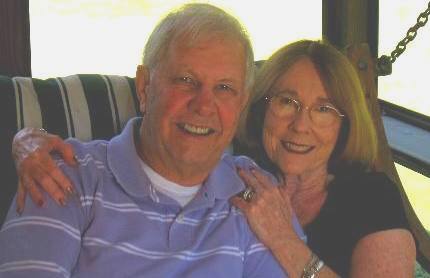
Mike & Joyce Hendrix
Mike & Joyce Hendrix who we are We hope you liked this page. If you do you might be interested in some of our other Travel Adventures: Mike & Joyce Hendrix's home page Travel Adventures by Year ** Travel Adventures by State ** Plants ** Marine-Boats ** Geology ** Exciting Drives ** Cute Signs ** RV Subjects ** Miscellaneous Subjects
We would love to hear from you......just put "info" in the place of "FAKE" in this address: FAKE@travellogs.us Until next time remember how good life is.
|
| ||
|
| |||
|
| |||
|
|