|
Texas Hill Country-Kerrville, Enchanted Rock State Park, Willow Loop Scenic Drive, Luckenbach, Hunt, Kerrville Schreiner State Park, Junction Places Visited: Texas Hill Country-Kerrville, Enchanted Rock State Park, Willow Loop Scenic Drive, Luckenbach, Hunt, Kerrville Schreiner State Park, Junction Saturday, May 31, 2003 Kerrville Schreiner State Park. Kerrville, Texas. $13.00 water & electricity 30-amps, 2 to 3 miles from downtown Kerrville yet out in the woods with wildlife. Today was our day to explore some prominent geological features in the Hill Country. For the most part the Hill Country is an uplifted portion of an ancient sea bed. As such it is composed of sedimentary rock, generally limestone. Road cuts throughout the Hill Country show distinctive layering of different sediments. Over time the earth bulged in this area and the whole region rose around 2,000 feet. Erosion has chiseled beautiful canyons along river banks where the different layers of sediment can be clearly seen. The distinctive layering of sediments is also displayed in numerous road-cuts. Today we headed to Enchanted Rock State Park 20-miles north of Fredericksburg. Enchanted rock is a massive bulge of molten rock (granite) that actually punched through the sedimentary rock millions of years ago. Granite is much harder than the surrounding limestone. The eroding limestone has left Enchanted Rock exposed as a giant pink granite dome (batholith) several miles across that rises 445-feet above the surrounding landscape. It is as if it were placed here as a classroom model where geologic features are clearly laid out in raw-rock profusion, devoid of soil or vegetation or macadamized cover. Exhibits in the park reminded us that as large as Enchanted Rock's granite domes seem they are but a small side piece of the huge, round globe of granite which rose toward the surface like a giant, hot balloon about a billion years ago. When the molten bulge of granite was making its way toward the surface it was coming into contact with existing sedimentary rocks. The heat and pressure resulting from that contact "metamorphosed" existing rocks. Marble is one of the rocks created in that fashion. Marble is limestone that is more or less crystallized during the "metamorphic" change. Marble ranges from granular to compact in texture, and as you know, is capable of taking a high polish. In this area pink marble is mined from areas where existing limestone came in contact with extreme heat and pressures as the molten granite bulged upward. Joyce and I have spotted several of theses marble mines. From Enchanted Rock we drove through Willow Loop an area east of Enchanted Rock where igneous and metamorphic rocks form jagged cliffs that are dramatically different from the sedimentary cliffs normally found throughout the Hill Country. At one point on the loop we stopped to inspect a marble mine. In April Willow Loop is known as one of the best wildflower trails in the state. In late May we can pay more attention to the geographic wonder of the landscape and the profusion of motorcycles sharing the views with us.
Bikers (as in Harley's) are having a rally in Austin this weekend with over 40,000 in attendance. We are just a short drive from Austin and as you might suspect bikers are doing what bikers do on the weekend. They are riding between stops on scenic roads throughout this section of Hill Country. Every establishment that sells bud-lite or long necks is packed out especially if shade and potty facilities are also available. The temperature was hovering around 100 degrees in the sun. However, it was cool in the shade. Luckenbach seemed to be a central meeting place for the touring bikers. Luckenbach seemed to hold several hundred at any one time even though caravans of them were constantly arriving and departing. The ambience and shade of Luckenbach in addition to the abundance of cold brew seemed to hold the restless crowd. As the sun began to settle in the western sky, Joyce located a small town rodeo and dance. Just west of Hunt a local group puts on a rodeo and dance every Saturday night. It is a place where the community gathers. The rodeo was not the professional quality of a PRCA event however, we liked it for its "hometown" quality. They must have run thirty or more barrel racers. Every teenage girl in the area had to run around the barrels. Many were on spirited horses that were not sure the rider was in charge. It was fun to watch as the young girls "made" the horse run the course the way they wanted it to be run. About half gave up on competitive times and concentrated on training, in other words making the horse round the barrel on the correct side. Much of the event was actually a training session for many of the girls and their spirited steeds. It was just as entertaining as the real professionals that have the event down to a science. After the rodeo we walked next door to the outdoor dance featuring a country/rock & roll group. Everyone was dancing and having a good time. Those 16 and younger had to leave the dance at 12:00 mid-night. Joyce and I thought that might be a good time for those of us over 55 to do the same thing. After all we need our sleep like the young folks. VBG The rodeo and dance was good home folks having a good time Saturday night. Joyce and I like that. Sunday, June1, 2003 Kerrville Schreiner State Park. Kerrville, Texas. $13.00 water & electricity 30-amps, 2 to 3 miles from downtown Kerrville yet out in the woods with wildlife.
After the night we had is it any wonder that we slept in before heading to lunch at the Inn of the Hills Restaurant. Their Sunday Buffet featured prime-rib, baked salmon and a salad bar that eschews iceberg lettuce if you get my drift. It was simply wonderful and something we will do the next time we are in Kerrville especially on Sunday. A country music group was jamming at the Hunt Country Store this afternoon but it was so hot that we did not stay but an hour or so. It is fun to have a good time with the locals but when the temperature reaches 95-degrees in the shade it is time to locate another source of entertainment. We both laughed as both of us simultaneously thought of the throngs of bikers that would be enjoying Luckenbach today. Monday, June 2, 2003 We drove 55-miles to Morgan Shady RV & Camping Resort. 600 S. 6th st. Junction, Texas 915-446-2580 Private campground in Downtown Junction on the South Llano River with sites under the shade of 100-year old pecan trees. 30-amps sewer & water. After a quick uneventful ride to Junction we set up the motorhome in an RV-Park in town rather than at South Llano River State Park located a few miles south of Junction. We arrived in Junction early so Joyce and I could visit the stockyard and watch the action associated with sale day. RV'ers should keep in mind that that the City of Junction offers free camping downtown on the bank of the South Llano River. The sites are beautiful and you do not need to get permission or anything. Just turn to the north on the west side of the down-town bridge. It will be obvious where to stay in the city park. If the temperatures were not reaching the 100 degree mark every day we would be camping there. Armed with information already gleaned from a previous trip to the Junction stockyard & auction we were better able to understand the carefully orchestrated pandemonium taking place. Ranchers are arriving in big 350 & 450 dually pick up trucks pulling large livestock trailers loaded with sheep and goats. Each rancher gets in the drop-off queue with his load of livestock. When it is his turn he drives into the drop-off pen. The gate is closed behind him with his entire rig (pickup & livestock trailer) now in an enclosed area. From here stockyard personnel and their team of dogs take over. Off to the side of the unloading enclosure empty holding pens await the load of livestock. For whatever reason animals do not want to get off the trailer they have been transported in. At least they don't immediately want to get off the trailer. That is all about to change. A big dog named Sparkplug and a smaller nameless sheep dog are in charge of livestock behavior modification. The back end of the livestock trailer is opened and the dogs are given the command to "pushem". That is when the dogs ease down one side of the trailer full of livestock until they get to the opposite end. Once they reach the opposite end behavior modification takes place. Both dogs start barking and the shepherd dog starts biting at the heels of the goats & sheep, Sparkplug stands ready to go for the throats of stubborn goats that don't respond to the barking and "ankle-nipping" technique. Within a few short seconds goats and sheep are tumbling out the open end of the livestock trailer as livestock in contact with the dogs actually push and shove the others out. Once the trailer is empty and the door shut the dogs scamper around the truck and trailer making sure that a wily critter has not hidden out. Then the dogs herd the critters into the selected holding pen. The human's job is to close the pen gate. A tag with a number is attached by glue to the back of one of the animals after the stockyard representative and rancher agree on how many animals were delivered. Now it is time for the rancher to head for home and the process of unloading begins for the next rancher. This process starts Sunday afternoon and ends around noon Monday.
Above the myriad stockyard pens is a walkway where visitors and ranchers can walk around and view animals without interfering with the melee going on below. Joyce and I quickly move to that walkway so we can be observers yet out of the way. Ranchers arrive with a mixture of livestock including, billy goats, nanny goats, and young goats of all ages, shapes and sizes plus many also have sheep in the mix. Stockyard personnel sort each rancher's livestock into groups that will bring the best price. We learn today that some buyers are looking for goats with good looking horns. Go figure! Joyce and I were watching one particular sort but could not tell what criteria was being used. To us the goats looked to be the same size and a variety of colors yet some were being sorted left while others went right. One of the workers told us they were sorting them for "horn" quality. He grinned and shook his shoulders muttering something like "whatever they want". We later learned that some ranchers are purchasing "hunting-stock". It seems that hunters will pay to shoot anything with horns. The sorting process is nothing short of orchestrated mayhem. A rancher's livestock is sorted into sheep and goats. Then the sheep have to be sorted by size and sometimes by boy/girl. Another sort segregates sheared sheep from those with a full coat. Each rancher's goats must go through multiple sorts to get them into groups by size. Buyers are acutely aware of a 5-pound variance in a group of animals. Each size gradient brings a different price. Even a few pounds makes a difference on the auction floor. Each sort is an exercise in herding cats. Goats seem a lot like cats in that they have a mind of their own and do not tend to naturally do what you want them to. It seems to me if goats could climb they would be every bit as difficult to herd as cats. Goats have no idea which way to go or what to do but they quickly learn not to argue with the dogs. Each operation has its team of dogs. Dog teams are comprised of shepherds and enforcers, the ankle-biters and the big boys that go for the neck. These dogs love to work livestock. They are not interested at all in the livestock until they are given a command. Once a command is given dogs spring into action. From our vantage point the dogs seem to know as much about what is going on as the men. Joyce tells me to stop and pay attention to the sounds. She is on to something, steel gates are clanking livestock is grunting, squealing, bleating, mothers calling their lost young and the young desperately crying for mother, men shouting at stubborn goats, dogs barking, an auctioneer rattling off his jabber and someone else barking out the number of the holding pen to put the newly purchased livestock. It is a cacophony of sounds that can only be described as sweet music to a rancher's ear. After being sorted, livestock must be moved to the auction ring. That takes a team of men and dogs. Action is fast and furious. A new group of animals are driven into the auction arena every minute or so. On the auction floor more sorting takes place. If one or more of the active bidders tell them to exclude a certain goat or goats they will. It may be because of weight, age, teats hanging, scrawny, lame, and sickly or a variety of other things. Then the bidding begins. Goats sell by the pound. It is difficult to tell why one bunch sells for more than another bunch. Healthy goats that weigh around 50-pounds may fetch $1 per-pound. These are bound for slaughter houses. Larger goats can go for as little as $.50 per-pound or as much as $.90 per-pound. Some are in demand as hunting stock while the larger "scrubs" are being picked up and transported to California. We were told that California was purchasing "cheaper" goats to use in clearing brush in fire prone areas. Supposedly it is a new program instituted this year to be used in place of controlled burns. These buyers are picking up goats that are not wanted by other ranchers as breeding stock or the meat market. Some goats go for as little as $.15 per-pound. They were bound for the dog/cat food market. As soon as a group of goats are sold they are run onto a scale that weighs the "lot". A sales ticket is flashed on a TV screen showing the successful bidder, number of animals purchased, weight of lot, amount of successful bid and who the animals are to be delivered to. Bidders are generally agents buying for a number of accounts. The successful bidder tells the auction house who he is buying the livestock for. With that information, auction house personnel & dogs move the purchased & weighed livestock to the holding pin the successful bidder has designated. Sheep were handled different than goats on the auction floor. We noticed a big goat in with a bunch of sheep. I had to ask the gentleman next to me why on earth they were selling the goat with the sheep when the buyers had been being so picky about what I considered miniscule differences in a group of goats. He laughed then explained that the goat was a member of the auction "team". His job was to lead the sheep through the auction ring then onto the scales. Joyce and I watched. As the men opened one gate the goat would move to the far end of that pen and the sheep would follow. Once all the sheep were in the pen the goat would return to the empty pen where the man would close the door behind it not allowing the sheep to follow. This would happen over and over. The goat would go into the pen where they wanted the sheep to go and the sheep would follow. Then the goat would return to the gate and the men would let just the goat back into the auction area. It was absolutely remarkable how that goat led group after group of sheep from pen to pen. That goat was as smart as the dogs. We were amazed at how he knew his role in the scheme of things. Once all the animals are auctioned everyone takes a short break from the breakneck activity. Buyers amble up to the pay window and tender a check for the day's purchases. At the same time livestock trailers are backing into loading chutes to carry off the days purchases. Now the activity is reversed. Livestock that has been sorted to the "N'th" degree is now being loaded. This time animals being loaded into individual trailers look identical. Now it is easy to tell what each purchaser was looking for. The same animals that did not want to get off the livestock trailer this morning do not want to get on the livestock trailer this afternoon. Loading is not a job for small ankle-biting dogs. Dogs like bruiser and sparkplug are the main players now. It is getting late in the day and everyone, dogs included, is ready to go home. Tempers are getting short especially with livestock that wants to be contrary. Real dogs with bad attitudes are moving stubborn critters now. We had a wonderful day at the auction. Thanks must be given to the myriad individuals I questioned relentlessly today. It is because of them that we understand much more about the truly unique operation. Tuesday, June 3, 2003 Morgan Shady RV & Camping Resort. 600 S. 6th st. Junction, Texas 915-446-2580 Private campground in Downtown Junction on the South Llano River with sites under the shade of 100-year old pecan trees. 30-amps sewer & water. It is HOT in Junction today so hot that outside activity has been drastically reduced. We spent most of the day reading plaques and historic markers located around the city. We also spent some time reading and generating plans/options for the next week or so as we head into New Mexico around Carlsbad. We have got to get to altitude and find some relief from this heat. That goal is still a week or so away but we are heading in that direction.
Junction is noted for pecans as well as livestock. Our readings of plaques and other history pieces around town tell the story of how a man named Oliver purchased a section of land containing hundreds of pecan trees way back in 1896. He became a pioneer in the pecan industry. One giant tree known as "Old Oliver" produced nearly 400 pounds of soft-shelled pecans per-year until 1935, when it fell victim to a flood. Fortunately, however, thanks to timely grafting, Old Oliver's descendants live on and pecan harvesting is now a major industry around Junction. I suspect that many pecan growers around the country have descendants of that special tree. Do you suppose that tree is the great, great grandfather of what we now call paper-shell pecans? Junction is also famous for the "Junction Boys". Junction is where the famous Coach Paul "Bear" Bryant took a group of boys for summer training and built them into a championship team. There is a book and movie made around that special event. Junction is a Texas town with water situated in a valley. It is located on the old Spanish route from San Antonio to Santa Fe, New Mexico. Up until the 1870s the area was controlled by Indians and outlaws. In 1876 a Texas Ranger Battalion swept the area clean of dangerous Comanche Indians and outlaws who found the rough country ideal for hideouts. The rangers combed every draw, rounding up all men found. They herded all to an area of big oak trees chaining hard cases to trees, then convened court to run them out of the county. Some of the "hard cases" did not make it past the big oak tree if you get my drift. With law and order established ranchers and farmers settled in the area and the rest is history. Click here for more Texas travellogsUntil next time remember how good life is. More Texas AdventuresAdventures by State ** 2003 Travel Adventures
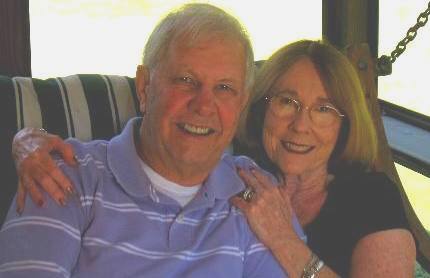
Mike & Joyce Hendrix
Mike & Joyce Hendrix who we are We hope you liked this page. If you do you might be interested in some of our other Travel Adventures: Mike & Joyce Hendrix's home page Travel Adventures by Year ** Travel Adventures by State ** Plants ** Marine-Boats ** Geology ** Exciting Drives ** Cute Signs ** RV Subjects ** Miscellaneous Subjects
We would love to hear from you......just put "info" in the place of "FAKE" in this address: FAKE@travellogs.us Until next time remember how good life is.
|
| ||
|
| |||
|
| |||
|
|