|
Ochlocknee River State Park, Wakulla Springs, Panacea, Manatee Springs State Park, Perry, Cedar Key, Crystal River, Homosassa Springs State Park in Florida Places Visited: Florida: Ochlocknee River State Park, Wakulla Springs, Panacea, Manatee Springs State Park, Perry, Cedar Key, Crystal River, Homosassa Springs State Park Sunday, January 27, 2002 Ochlocknee River State Park south of Tallahassee and near the metropolis of Sopchoppy The high-pressure system evaporated! There was cloud cover this morning that delivered drizzling rain all afternoon and night. Joyce and I headed to Wakulla Springs State Park and Lodge. We always like to wander through the Lodge just to view the opulence. Wakulla Springs Lodge was the vision of Edward Ball's back in the 1930's. It is a unique retreat complete with wrought iron, Tennessee marble, and hand made ceramic imported tile. The gigantic lobby is decorated with hand-painted cypress beams, massive fireplace, elegant arched windows and marble floors. The ceiling beams are decorated with colorful "Florida scenes" flowers, birds, animals and plants. In the lobby rests "Old Joe" the legendary guardian of Wakulla Springs. Said to be over 200 years old at his death this eleven foot two inch alligator watched over the spring from his spot on the far side. Shot by unknown poachers in 1966 "Old Joe" was preserved and put on display for all to enjoy. The snack bar in the lodge is said to be the world's longest marble counter. Enough about the Lodge, Wakulla Springs is what this place is about. Wakulla Spring is one of the world's largest and deepest freshwater springs. An average of nearly 400,000 gallons a minute flow from the spring's huge opening. Cave diving teams have explored the massive cave system feeding the spring. Swimming 180 feet down to the spring opening, then back into the labyrinth of underground tunnels that come together to form the Wakulla Spring. These divers have descended many, many miles back into the system, underground, underwater, in the dark, sometimes at depths of 360 feet. These underwater explorers have not come anywhere near the end of this gigantic system. We hovered over the spring in a glass bottom boat operated by the State Park System. As we drift over the 185' deep spring a variety of fresh and saltwater fish swim into view. For a few minutes we are able to view huge mastodon bones through the glass bottom (enough mastodon bones have been recovered from deep within the spring to completely reconstruct three mastodons). In addition to the mastodon bones fossilized bones of giant Sloth, giant Armadillos, Camels and other ancients litter the floor of the underwater caverns that feed the spring.
Drifting over the spring in a glass bottom boat was exciting but not nearly as exciting as the river cruise. On the river cruise we motor down the river created by the spring. We view numerous sunning & swimming alligators, turtles and myriad ducks, herons, egrets and other wading birds. None of the wildlife was afraid of the boat. We got within mere feet of the alligators and birds. Nowhere have we ever been able to view wildlife at such close range. Alligators, in other places, generally slip underwater anytime you get close to them. The alligators here do not seem to care how close the boat gets. Herons have learned to eat in the prop-wash. This really makes for close viewing. Our next adventure was the Gulf Specimen Marine Laboratory in Panacea. The marine laboratory is a non-profit organization that maintains a wide variety of live marine creatures for viewing. This is a unique place that many individuals were enjoying. Larger aquariums around the country feature a variety of large fish. This place concentrates on shellfish, sponges, corals, anemones, sand dollars, starfish, octopus, sea stars, sea cucumbers, blowfish, sea urchins and other small creatures. One of the unique things about this place is the way marine life is displayed. Many display aquariums are only 2" to 10" deep yet are on legs so that they are at countertop level. These aquariums hold small shellfish, crabs and mollusk that are easy to view. Larger tanks hold fish and turtles. Constant rain spoiled the remainder of the day. Monday, January 28, 2002 Manatee Springs State Park, near Chiefland, Florida on the banks of the Suwannee River. We are moving 150-miles today. That is longer than we are used to, its tough but we have to do it. When we are going to drive so far we have to find a way to break up the trip. Accordingly, we stop in Sopchoppy 11-miles up the road to purchase some wild "Mayhaw Jelly" and "Tupelo Honey" from a roadside vendor. Both of these products are indigenous to this part of Florida and possibly nowhere else on earth. Tupelo trees primarily grow in the flood plain of the Apalachicola River. Tupelos bear tiny greenish-white flowers and berrylike fruits. The fruits provide food for migrating birds. Bees collect nectar from the flowers of tupelo trees to make the famous tupelo honey. Beekeepers clean existing honey from hives then place the hives on barges and transport them up the Apalachicola River for the 6-week blooming cycle of the tupelo tree. Tupelo honey has a distinctive taste. Also it is different from other honeys in that it does not crystallize. Those that know say tupelo honey has a different chemical composition. The "Mayhaw" jelly is made from the fruit of a small hawthorn common in the southern United States. I will let you know if it is anything special.
An hour later, in Perry, Florida, we pull into a K-Mart parking lot and unhook the Saturn so we can go to the Forest Capital Museum & state park. The museum celebrates the timber that built Florida. Major emphasis is placed on longleaf pines, which grow on the museum grounds. Each exhibit case is made of a different native wood. The most unique exhibit in the museum is a wooden map of the state of Florida. Each of the 67 counties in the state is shaped from a different species of native tree. Florida has 314 known species of trees growing in the state. This exhibit features a few of the least known such as the rare Torreya and gumbo-limbo. An elaborate diorama depicted the entire turpentine harvest and production process. Other dioramas of life-size cypress swamp and hardwood hammock habitats feature preserved birds and other animals that inhabit each. Adjacent to the museum is a "Cracker Homestead" interpretive site. The homestead is typical of those that once dotted the pinewoods of north Florida at the turn-of-the-century. The term "cracker" refers to the settlers who lived in the rural areas. They may have acquired this name from the early Floridians who cracked their whips to drive cattle and oxen. Like fences out west these split-rail fences were used to keep range cattle and wild hogs out of garden plots. Yards around cracker homes have no grass and are swept clean to help avoid fires, which were common in the pinewoods. The "cracker" house is a distinctive "dogtrot" home found throughout the south and west in that era. A breezeway, or dogtrot, actually separates the two, single rooms. Porches were added to the more elaborate dogtrots to provide additional living and working areas sheltered from the hot sun. Like in the swamps of Louisiana large cypress piers keep the house off the ground to prevent rot. Out west, where rocks are plentiful, houses were constructed off the ground on rock piers. The orientation of these "cracker" houses was also very important. Most of them were constructed on a north-south axis to allow sunlight on three sides. This helped to keep the logs dry, preventing decay. Back then the windows did not have screens to keep mosquitoes out. Each bed has a mosquito net that hangs from the ceiling. The kitchen is separate from house because of the chance of fire. The 4th weekend in October the state park turns the homestead into a demonstration complete with a mule powered sugar cane mill. A large iron kettle and fireplace stand ready to cook the cane juice to make syrup. It looks like a fun time to visit. After touring the museum we head to the Chaparral Steak House recommended by locals. We were told about the buffet featuring home cooking. They were serving southern vegetables like only a good southern cook can provide. The deserts were also out of this world. We will stop by the Chaparral Steak House the next time we pass through Perry. Seventy-miles later we pull into Manatee Springs State Park and take a long walk to the springs and the Suwannee River. Part of our walk was on an elevated walkway that meandered through the swamp and ended at the Suwannee River. A group of individuals are swimming and skin-diving in the spring. Unlike Wakulla Springs this place does not have wildlife. The spring produces around 100 million gallons of crystal clear water daily. A swamp of cypress, gum, ash and maple trees surrounds the spring. Water from the spring flows into the Suwannee River several hundred yards away. Twenty-three miles downstream the Suwannee empties into the Gulf of Mexico. The spring is named for the West Indian Manatee that frequents the spring during cold weather to get protection in the constant 70-degree water flowing from the spring. Temperatures reached 83-degrees today so Manatees were not in the spring.
Tuesday, January 29, 2002 Manatee Springs State Park, near Chiefland, Florida on the banks of the Suwannee River. Joyce and I headed for Cedar Key this morning. On the way we decided to explore the National Wildlife Refuge along the Suwannee River. Just before we got to Cedar Key we stumbled across Shell Mound County RV-Park. This was a really neat park. How does $5.00 per night for water and 30-amps sound? In addition it is located on the water and is 5-miles from Cedar Key just off CR-347. Next time we will be staying in this park. Less than a mile away is a 28-foot Kitchen Midden or shell pile made up of shells of oysters and other mollusks eaten by prehistoric Indians living by the Gulf. The shell mound area is heavily wooded with well maintained hiking trails plus a fishing pier. Trails lead across the marsh on boardwalks, through uplands with live oaks and longleaf pine then back to cedar and cabbage palms. Cedar Key is a place steeped in history. It has evolved from the earliest Indian inhabitants, through the eras of pirates, Seminole Wars, Civil War, cedar mills, tidal waves, hurricanes, oyster and mullet fishing to the current clam farming industry. A few years ago Florida passed a constitutional amendment severely restricting the use of gill nets. Commercial net fishermen used gill nets at the time. This meant that commercial fishermen had to change methods of harvesting. Clam farming is a new seafood industry in the Cedar Key area. Currently, the new industry now supports more than 200 clam grow out operations on over 650 acres of state owned submerged lands off the Coast of Levy County. The area's warm waters and high natural productivity levels create a superb environment for growing clams. In less than a decade, Cedar Key has become the leading producer of cultured clams in the state of Florida. Over 65% of the statewide production is associated with this area. Sales (dockside value) of cultured clams produced by Cedar Key growers were estimated at $10 million in 1999. Clam farming has brought economic revitalization to Cedar Key and has allowed its citizens to continue to make a living off the water. A local entrepreneur on the city waterfront confided to me that commercial fishermen that turned to clam farming were doing much better than they were pre-net ban. She laughed and said that they were all driving new trucks now. She told how her neighbor, a former net fisherman, was making double what he was back when he was a mullet netter. A number of restaurants line the waterfront in downtown Cedar Key. They cater to tourist. As always we try to avoid the tourist traps and dine with locals. Annie's Café on the corner of highway 24 & 6th street was that place. The food was great. If you want to eat with locals you should try Annie's when you visit Cedar Key. Wednesday, January 30, 2002 Manatee Springs State Park, near Chiefland, Florida on the banks of the Suwannee River. We are having difficulty making contact with several of the individuals we are planning to visit while in this part of Florida and there are more things that we want to see and do around here so we have decided to stay for two extra days. We had a good time in Cedar Key yesterday and want to return plus we have not explored Fanning Springs State Park just 8-miles north of Chiefland. Joyce (you know she is boss) decided we would visit Fanning Springs today. The springs offer a good swimming area that was being utilized by a group of local teens. Fanning springs is located where highway-19 crosses the historic Suwannee River. The springs are only about 300-yards from the river. This natural spring delivers 50 million gallons of crystal clear water per-day from deep within limestone caverns. Fanning Springs State Park features an upland hardwood hammock as well as many acres of river bottomland bordering the river. Old growth oaks and longleaf pine dominate the higher ground while maples, cypress, sweet gum, cabbage palm and a variety of gum trees make up the bottomland.
The Suwannee River originates in the Okeefenokee Swamp around Waycross in South Georgia. It meanders some 260 nautical miles through north Florida before emptying into the Gulf of Mexico around Cedar Key. Fanning springs is about 36-miles from where the Suwannee empties into the Gulf. Lyrics in the song "way down upon the Suwannee River" has made the Suwannee a household name even though most would have trouble finding it on a map. Thursday, January 31, 2002 Manatee Springs State Park, near Chiefland, Florida on the banks of the Suwannee River. We headed back to Cedar Key today. This time we went to the Cedar Key State Museum that is part of the State Park system. Most of the museum is the lifetime collection of St. Clair Whitman. During his lifetime he managed to assemble one of the most complete shell collections ever assembled. The cedar industry was explained. The cedar growing in the area flourished where limestone was very near the surface. Cedar was used in the manufacture of pencils. Literature from the time described the cedars in the area as limitless. However, in less than 50 years they were completely eradicated with no though as to a second crop. Cedar logs were transported to a nearby island where cedar boards ½ the thickness of a pencil were produced. These thin cedar boards were transported to New York where the remaining manufacturing process was completed. During the Civil War, blockade runners' hauled cotton, lumber and naval stores to foreign ports and brought food and war material for the Confederacy. Salt, needed by Southern armies, was made locally by boiling and evaporating seawater in large iron containers. Salt was important in those days as a preservative for meat and fish. To say the least Cedar Key was an important port. Because of it's importance to the war effort Union forces in 1862, attacked by sea and captured Cedar Key. This deprived the confederacy of a valuable seaport and rail terminal. After the war lumbering again let to prosperity until all the pine and cypress were cut as well as the cedar. The remaining population turned to the sea and the bountiful oyster and scallops in the area. In short order this resource lost its value as a result of over harvest also. Then came the years when gigantic green turtles that grazed on the sea-grass were captured and shipped via railroad to New Your. As with every other resource before it the green turtle was also harvested to near extinction. Finally, Cedar Key's last flirtation with industry, which involved the manufacture of brushes and brooms from palm fiber, ended with the discovery of plastics. Next we took a two-hour boat ride around several of the neighboring islands. Islands in the vicinity are either owned by the Federal or State Government. Sea Horse Key had enormous dunes with an abandoned lighthouse. The captain/narrator on our boat told us that the 52' dunes made it the highest ground on the Gulf Coast all the way from Texas. I think we have heard that claim before but can't remember where else made that claim. Sea Horse Key, owned by the Federal Government, is a major rookery. Our captain told us that no one was allowed on the island during the nesting season. Many of the pelicans in the area utilize the island, as do herons, bald eagles, ospreys, terns and skimmers. This would be an exciting place to visit when all these birds were rearing their young. Ospreys in the Pensacola area as well as Apalachicola area migrate during the winter and return in the spring to nest and rear their chicks. However, here in Cedar Key Osprey are year round residents. After the fabulous boat ride we headed to the "Cedar Key Historical Society Museum". This was another good museum that concentrated on explaining oyster farming, clam farming, turpentine production, lumber industry (pine & cypress), the red cedar pencil industry and the manufacture of brushes & brooms from palmetto bushes. Each time we study the exhibits in a museum the better we understand the subject. Friday, February1, 2002 Rock Crusher RV-Resort: Crystal River, Florida (Near Homosassa Springs) We arrived in Crystal River around noon and settled in. In short order our friends, Chuck and Mary Ann, arrived in their new motor coach. Chuck left his tow car at home and brought his golf cart instead. We toured the facilities in the golf cart then headed back to their palace to grab a bite and reminisce about the past summer. We met Chuck and Mary Ann last summer in Kanab, Utah where we enjoyed Zion National Park together. They headed to California, Oregon, Washington and an Alaska cruise before heading home. It was exciting discussing the places we had visited. Rock Crusher RV-Resort offered a Buffet & Dance Band in an adjoining pavilion. Around 6:15 Chuck and Mary Ann stopped by in the golf cart and took us to the dance. The Big Apple Show Band started playing halfway through dinner and continued until 10:00. How could it get any better? Dining with good friends and dancing the night away with your honey Saturday, February 2, 2002 Rock Crusher RV-Resort: Crystal River, Florida (Near Homosassa Springs) We spent time with Chuck and Mary Ann before they headed back to Spring Hill. Then Joyce and I headed to lunch at Kibbie's Dockside Restaurant on the Homosassa River about 9-miles from the Gulf. We dined on a dock under the shade of a huge Spanish moss draped live oak tree watching a parade of boats slowly cruising up and down the river. A band was playing just behind us. What more can you ask for lunch? The food was fine and everything else out of this world. In addition to boats parading up and down the river an otter joined the crowd and cruised right past us. We stayed as long as possible before leaving for Homosassa Springs State Park. Homosassa Springs State Park has two entrances, one you drive up to the State Pakr the other you ride a boat several miles down the river to the State Park. We chose to ride the boat. Homosassa Springs SP is a class act. They were feeding some captive manatees as we arrived. That was an interesting show. The park provides a walkway that leads to an underwater viewing room with 360-degrees of windows. From these windows we are able to view a surprisingly large variety of saltwater fish milling around the spring. Jack crevelle, redfish, sheep head, snook, black drum and mullet seemed at home in the fresh water spring. I have read about these saltwater fish frequenting freshwater springs but seeing is believing. The Jacks were 20-pounders like the ones that crash schools of baitfish up and down the coast. Several large snook were making a group of anglers hyperventilate. Farther into the State Park we watched the lone hippopotamus lumber around a small holding pond. Next to the Hippo's pond was the gator pond. A group of big gators were sunning themselves. As big and ugly as the gators were some wise guy remarked that they were better looking than the ones Florida raised over in Gainesville. The crowd got a good laugh out of that. (If you are not from Florida you might not understand that dig). Another hour or so of being treated to virtually every bird and animal life in this part of Florida we exited the park. On the other side of Homosassa River we stopped and toured ruins of the Yulee Sugar Mill historic State Park. More than 100 years ago, this mill was a thriving sugar mill and sugar cane plantation. In 1851, the sugar mill and plantation had 1,000 workers. Unlike most sugar mills of the time this one used steam power to turn the squeezing rollers. The raw cane juice was heated in a series of large iron kettles. Eventually most of the water evaporates. What remains is a stiff mass of syrup and crystals called massecuite. The massecuite is placed in barrels with tiny holes in the bottom. The liquid will seep through these holes, leaving sugar crystals inside the barrels. This liquid is molasses. By the way, this sugar is not white it is brown. To get white sugar it has to go through more processing. Now you know all I know about producing sugar at the Yulee Sugar Mill back in the 1850's. Click here for more Florida travellogsUntil next time remember how good life is. More Florida AdventuresAdventures by State ** 2002 Travel Adventures
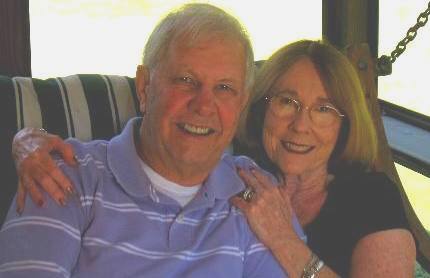
Mike & Joyce Hendrix
Mike & Joyce Hendrix who we are We hope you liked this page. If you do you might be interested in some of our other Travel Adventures: Mike & Joyce Hendrix's home page Travel Adventures by Year ** Travel Adventures by State ** Plants ** Marine-Boats ** Geology ** Exciting Drives ** Cute Signs ** RV Subjects ** Miscellaneous Subjects
We would love to hear from you......just put "info" in the place of "FAKE" in this address: FAKE@travellogs.us Until next time remember how good life is.
|
| ||
|
| |||
|
| |||
|
|